
Last updated November 18, 2026
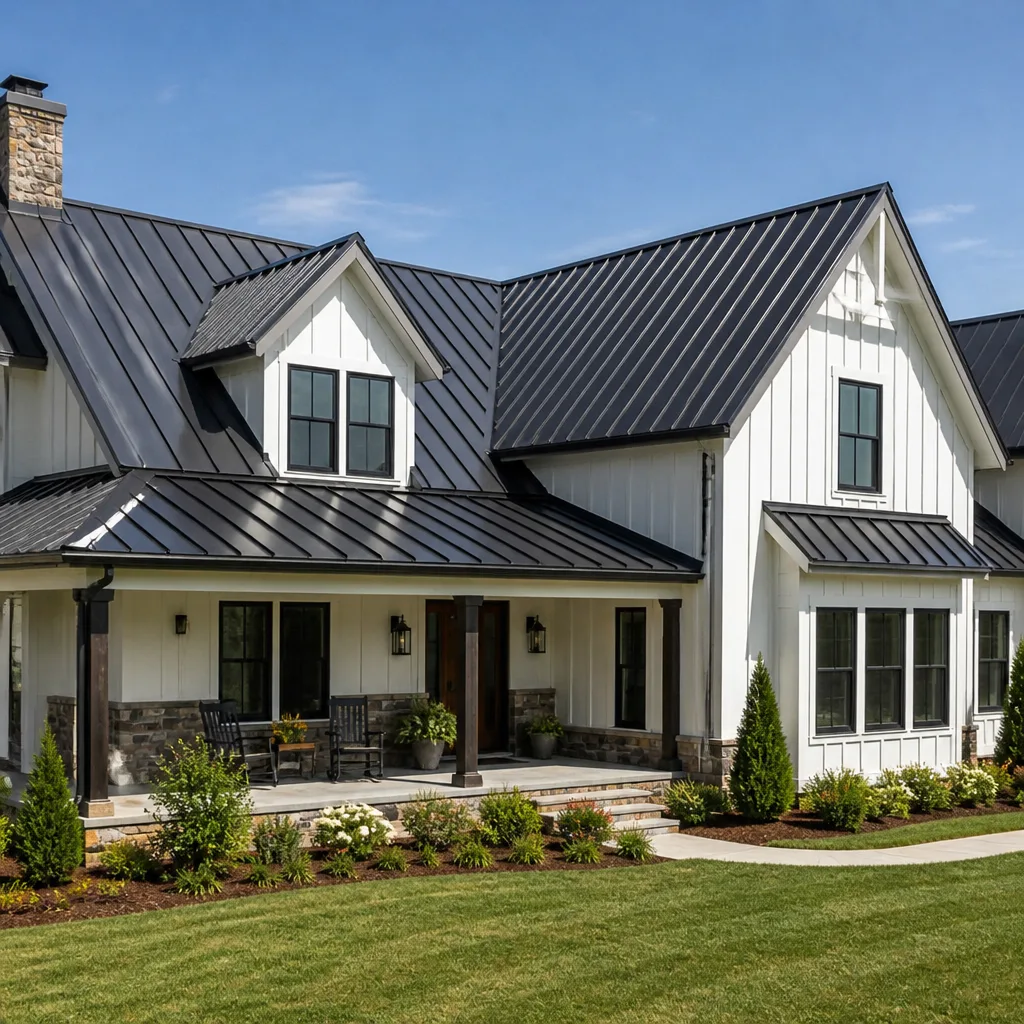 Metal roofing
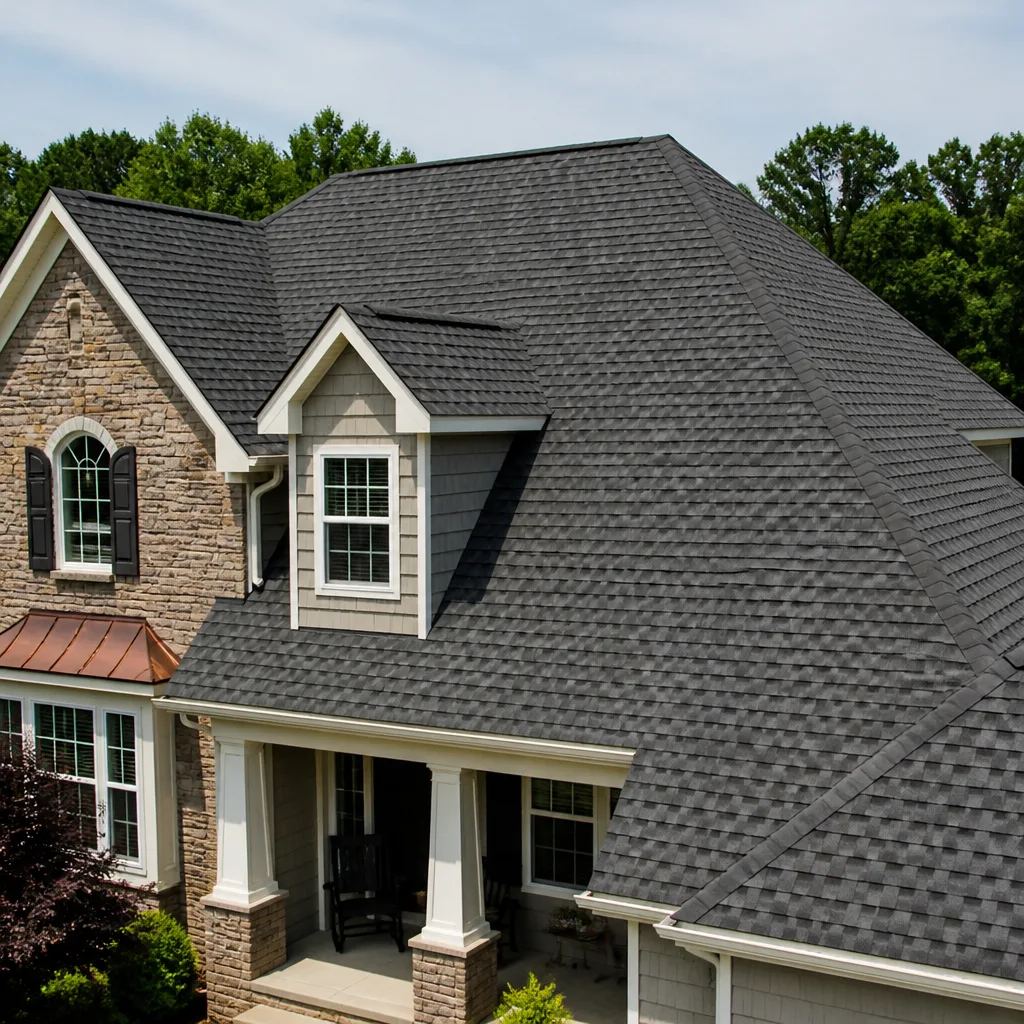 Architectural shingles
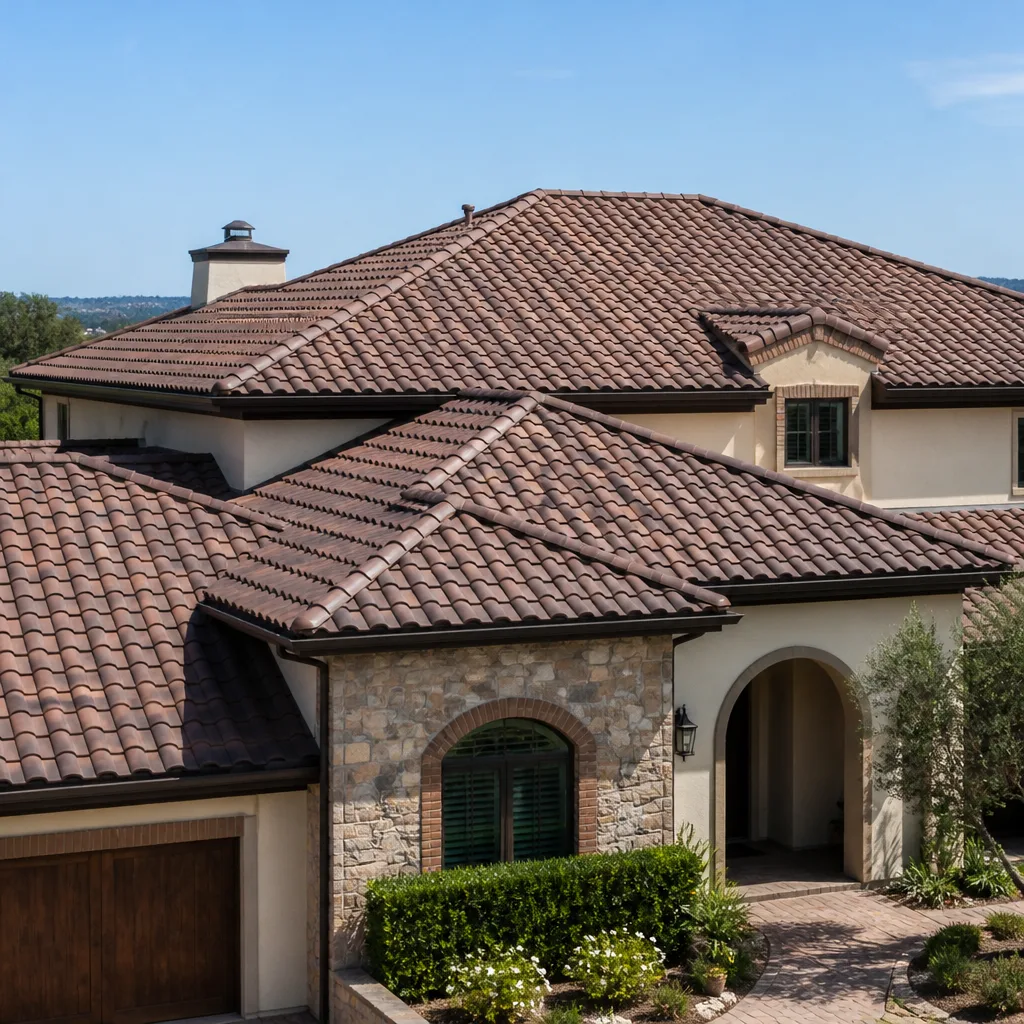 Tile roofing
 GAF
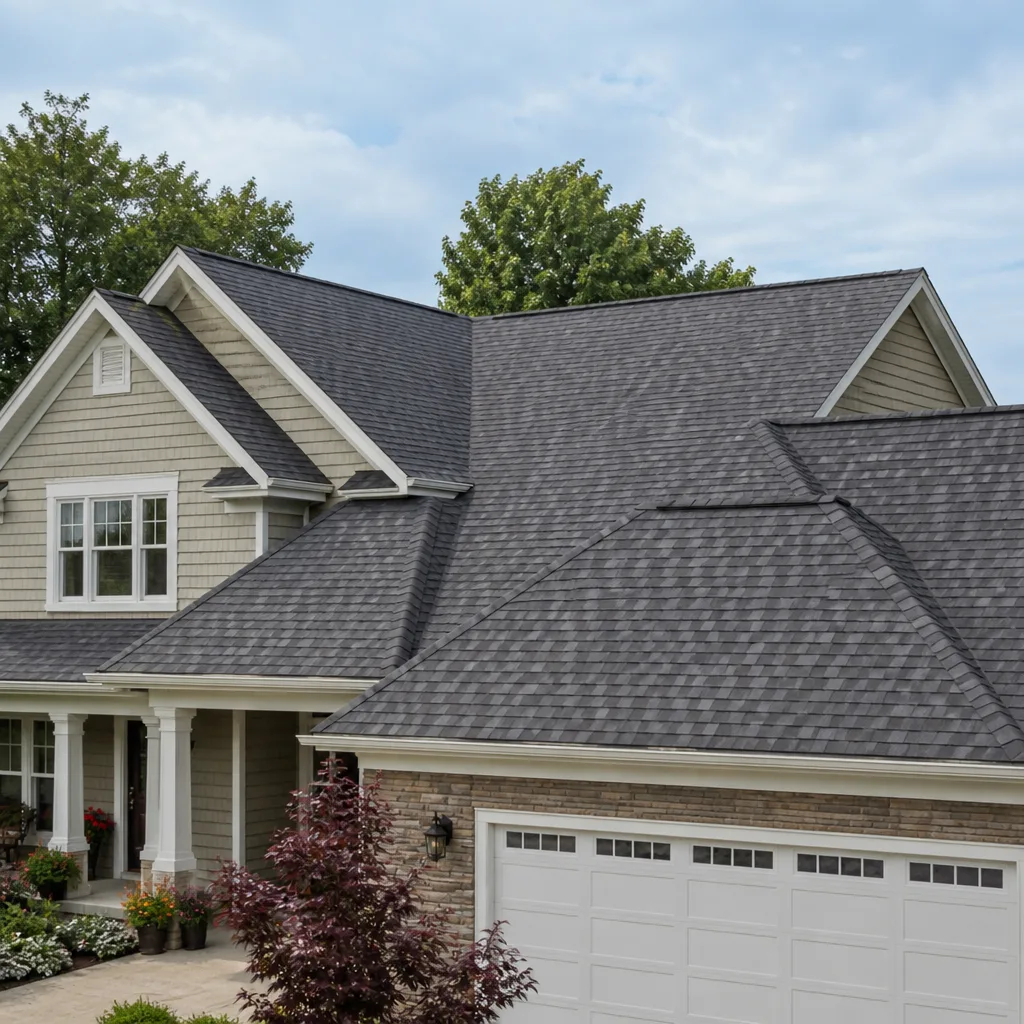 Owens Corning
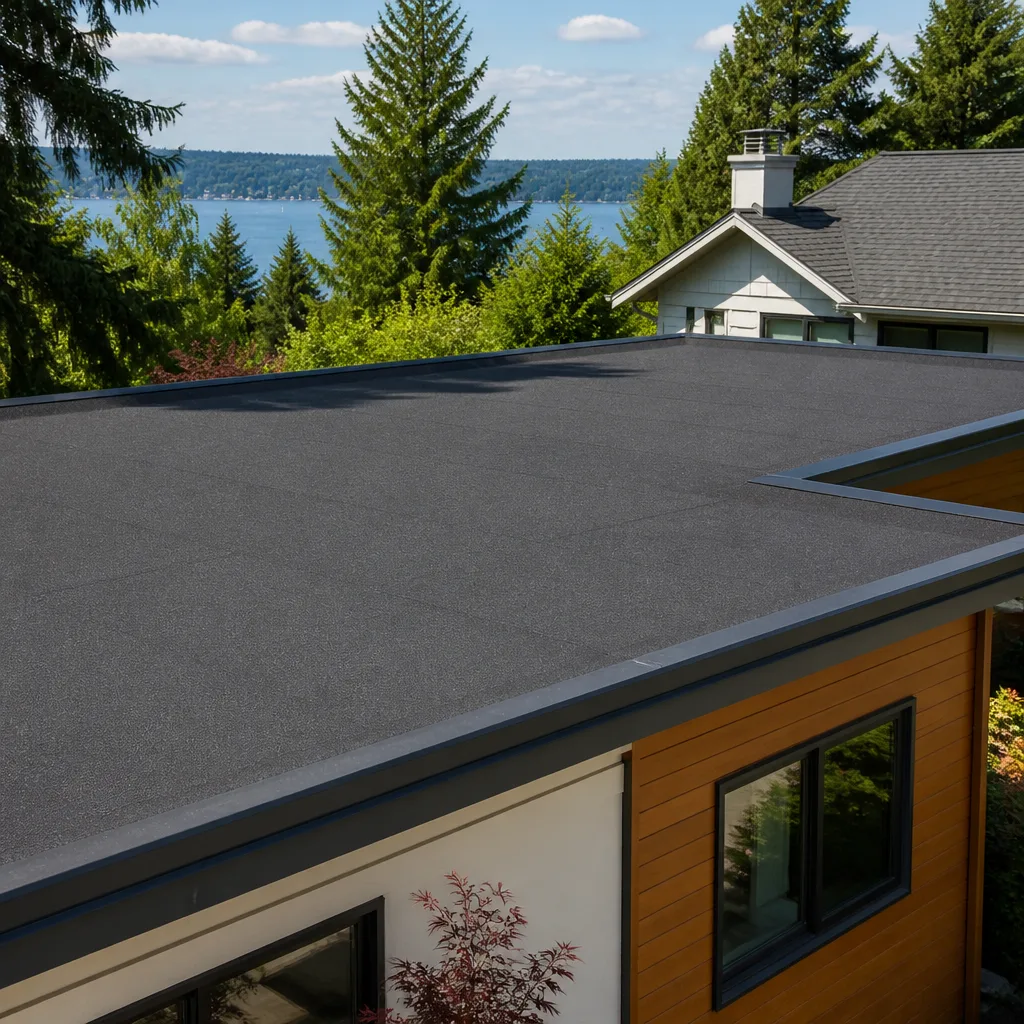 Flat & low-slope
Free roof inspection with deck photos before we talk money - GAF and Owens Corning certified installation
How to Hire a Roofing Contractor in Summerlin: A Step-by-Step Guide
Most homeowners in Summerlin vet a roofer by asking two questions: are you licensed, and are you insured. Both matter, and neither one tells you whether the contractor understands the material and code environment your roof actually lives in. Nevada issues a specific C-15 roofing license classification, and a surprising number of homeowners never ask to see it, let alone learn what it covers. This guide walks through the checks that separate a contractor who knows Summerlin roofs from one who is learning on yours: how to run a real license lookup, the five questions that expose whether a contractor understands HOA approval, how to read an estimate line by line, and how to tell a manufacturer warranty from a workmanship warranty. Read it before anyone gets on your roof.
Quick Answer
To hire a roofing contractor in Summerlin, verify an active Nevada C-15 roofing license through the state contractor board, confirm the license classification matches roofing work and not a related trade, ask five questions about HOA approval and local material practices, request a written line-item estimate, and confirm in writing both the manufacturer warranty and the workmanship warranty. Do all of that before signing anything, and get at least two itemized bids to compare.
Styles & brands we work with
- Architectural shingles
- Metal roofing
- Tile roofing
- GAF
- Owens Corning
- Flat & low-slope
Table of Contents
- How Do You Verify a Nevada C-15 Roofing License?
- The Five Questions That Reveal Local Experience
- Why HOA Approval Trips Up Summerlin Roofing Projects
- Why Single-Brand Contractors Limit Your Options
- How to Read a Roofing Estimate Line by Line
- Manufacturer Warranty vs. Workmanship Warranty
- What Summerlin’s Climate Asks of a Roof
- Common Mistakes to Avoid
How Do You Verify a Nevada C-15 Roofing License?
You verify a Nevada roofing license by looking the contractor up in the state contractor board’s public database, confirming the license is active, and checking that the classification is C-15, which is the roofing classification in Nevada. A pass or fail answer is not the whole story. The lookup shows you more than whether the contractor is allowed to work. It shows you how they work.
The Nevada State Contractors Board maintains the lookup, and it is free and public. Have the contractor’s license number in front of you before you call them, not after. If they hesitate to give it, that itself is your answer.
Here is what the lookup actually reveals beyond an active status:
- Classification. Confirm the license is C-15 roofing. A contractor licensed for a related trade is not licensed for your roof.
- Status history. A license that has been suspended, reinstated or had disciplinary action recorded tells you something a cheerful phone manner will not.
- Complaints and disciplinary actions. The board records formal complaints and actions. Read them, including the resolved ones.
- Bonding and insurance on file. The record shows whether the contractor is carrying the coverage the state requires. Ask for a current certificate too.
- Qualifying party. Nevada licenses attach to a qualifying individual who has passed the trade exam. The record shows who holds that role for the license.
Ask for the license number in writing, run the lookup yourself, and do it again the week work starts. Licenses lapse. A contractor who was active when you signed the contract may not be active when the crew arrives. In Summerlin, where a lot of roofing is replacement work on homes that are now a couple of decades old, a lapsed license on a full tear-off is a problem you do not want to discover mid-project.
One more thing worth doing: ask the contractor to email you a certificate of insurance directly from their carrier, not a photocopy. Carriers issue these on request. A contractor who cannot produce one is not ready for your job.
The Five Questions That Reveal Local Experience
Five questions separate a contractor who has worked Summerlin roofs from one who has not. Ask them in the first conversation, before anyone visits. The answers tell you whether the contractor understands the local approval and material environment, and whether they will hand problems back to you or handle them.
- “How do you handle HOA architectural approval for a roof replacement here?” Summerlin has one of the most active HOA environments in the Las Vegas Valley. A contractor who has done replacements here has a process for submitting material samples, color selections and spec sheets to an architectural review committee. A contractor who says “that’s your job” is telling you they will not handle the part of the project that stalls most often.
- “Which manufacturers are you authorized to install, and how many?” A contractor who installs a single brand will recommend that brand regardless of your roof. One who carries several has a reason to match the product to your situation. We install GAF, CertainTeed, Owens Corning, IKO, Atlas, Tamko and Boral, which means the recommendation follows your budget and roof profile rather than inventory.
- “What underlayment and ventilation spec do you run on a tile roof here?” Tile roofs dominate much of Summerlin, and the underlayment beneath the tile is what actually keeps water out. A contractor who cannot explain their underlayment choice in plain terms has not thought hard about it.
- “Who does the work: your own team or a subcontractor?” The answer should be specific. Roofing Summerlin handles inspection through replacement in a single relationship, so the person who inspects your roof is not handing you off to a different company for the work.
- “Can I get an inspection without committing to repairs?” A standalone roof inspection is a legitimate service. A contractor who treats inspection as a sales funnel will find a reason your roof needs replacing. One who offers inspection as its own service will tell you the roof has years left if it does.
You do not need all five answers to be perfect. You need them to be specific. Vague reassurance on any of these is the signal to keep calling. If you want a baseline before you start interviewing, scheduling an independent Roofing Summerlin inspection gives you an honest read on condition first, so you can compare bids against a known starting point.
Why HOA Approval Trips Up Summerlin Roofing Projects
HOA architectural approval is the single most common reason a Summerlin roof replacement stalls after the contract is signed. The homeowner picks a contractor, the contractor picks a shingle, and then the project sits for weeks waiting on an architectural review committee. The fix is knowing the process before the contract, not after.
Summerlin’s communities run under architectural review requirements that vary village to village. Some processes are quick. Others require a full submittal with material samples, manufacturer spec sheets, color chips and sometimes a site plan. The committee reviews for consistency with the community’s design guidelines, which means your approved product may be narrower than the full manufacturer catalog.
What to ask, and what a good answer sounds like:
- “Have you submitted to this community’s review before?” The answer should name a process, not a guess.
- “Who assembles the submittal?” The contractor should offer to prepare the material documentation. You handle the homeowner signature.
- “What happens if the committee rejects my first color choice?” A contractor with access to several brands can pivot to a compliant product without restarting the whole selection. One with a single product line may not be able to.
- “How does the approval timeline affect the schedule?” A realistic contractor builds the review window into their schedule and tells you what it usually runs in your community. One who promises to start next week has not done this here.
This is where material breadth earns its keep. If your community’s guidelines call for a specific profile or color family and your contractor only installs one brand, you may be stuck. With several manufacturer lines available, we can usually find a compliant product that fits both the guidelines and your budget. Compare that against a single-brand pitch and the difference is obvious: one contractor is solving your constraint, the other is solving their inventory.
Why Single-Brand Contractors Limit Your Options
A single-brand contractor is not lying to you when they recommend their brand. They are just not choosing from a full field. When a contractor installs one product line, every recommendation they make is shaped by what they carry. That is not a character flaw, it is an incentive problem, and it affects the price and the performance you get.
Multi-manufacturer access changes what a recommendation means. When a contractor installs several brands, the question shifts from “what do you have” to “what fits this roof.” Those are different conversations. A few things to understand:
- Warranty tiers differ by brand and by product line. The same contractor may be able to offer you a stronger coverage tier from one manufacturer than another for a similar roof. Ask to compare them.
- Product profiles differ. Shingle weight, wind ratings and color palettes vary across brands. If your HOA guidelines narrow the color choices, more brands means more chances one fits.
- Installation systems differ. Ventilation requirements and substrate compatibility are not identical across manufacturers. A team that works across several brands has hands-on experience with more than one system.
- Price competition works in your favor. A contractor who can source from several lines has more room to fit a product to a budget than one locked into a single catalog.
When you get estimates, ask which manufacturer and which product line each bid specifies. Then ask whether a comparable product from another brand would cost less or carry better coverage. A contractor who can answer that question with a straight comparison is one worth hiring. A contractor who cannot name a second option is a single-brand shop whether they say so or not.
We keep seven product lines on the roster, including GAF, CertainTeed, Owens Corning and IKO, so recommendations are driven by your roof rather than by what happens to be on hand. That also means we can show you the warranty tiers side by side rather than describing one in isolation.
How to Read a Roofing Estimate Line by Line
A roofing estimate should itemize materials, labor, tear-off, disposal and any code-driven components separately. If a bid arrives as a single lump sum with a shingle brand name attached, you cannot compare it to anything, and you cannot tell what got left out. Most bids are missing something. Your job is to find out what.
Here is what a complete, itemized estimate should show:
- Tear-off and disposal. Removal of the existing layers and the dumpster or haul-away cost, listed separately.
- Underlayment. The specific product, not just “underlayment included.” On a tile roof this is the waterproofing layer that matters most.
- Decking and substrate. What happens if the sheathing is soft or damaged under the old roof, and what the per-sheet charge is if it needs replacing. This is the single most common source of change orders.
- Flashing. Valley, chimney, skylight and wall flashing, itemized. Vague “flashing included” language hides a lot.
- Ventilation. Ridge vent, intake vent and any required ventilation correction, listed as line items.
- Ice and water shield or equivalent. Where it is applied and how much.
- Labor and warranty terms. Both the manufacturer warranty and the workmanship warranty stated in writing.
Red flags to watch for in the bid itself:
- A single lump sum with no breakdown. You cannot compare it and you cannot audit it.
- “Standard flashing” or “as needed” language with no quantity or price attached.
- No mention of decking repair pricing, which leaves the door open for a costly surprise later.
- A warranty description that names a brand but not a coverage level.
- No mention of permits or inspection. In Summerlin, replacement work typically requires a permit and an inspection, and a bid that ignores both is incomplete.
Ask every contractor to price the same scope so the bids line up. Then ask what each bid left out. When you are ready to compare a repair against a full roof replacement quote, put both numbers on the table and ask which one your roof actually needs. A contractor who can explain the difference in plain terms is the one you want.
Manufacturer Warranty vs. Workmanship Warranty
A manufacturer warranty covers the roofing material. A workmanship warranty covers the installation. These are two separate promises from two separate parties, and most roofing complaints fall into the gap between them. Understand both before you sign.
The manufacturer warranty comes from the shingle or tile maker. It covers defects in the product itself. It does not cover a leak caused by an installation error, and it does not cover labor to replace a defective product. The coverage level depends on the specific product line and, in many cases, on whether the installer is authorized by that manufacturer to offer the full tier.
The workmanship warranty comes from the contractor. It covers installation errors: a missed nail, a poorly sealed flashing detail, an improperly lapped underlayment. This is the warranty that addresses most of what actually goes wrong on a roof.
How to confirm both before you hire:
- Get the manufacturer warranty terms in writing, by product line. Not “backed by the manufacturer,” but the actual document with the coverage level named.
- Ask whether the contractor is authorized to issue that warranty tier. Manufacturer warranty tiers are often tied to installer certification. If a contractor cannot name their authorization, that is the answer.
- Get the workmanship warranty in writing, with the duration and what it covers. Ask whether it covers labor and materials, and whether it transfers if you sell the home.
- Read the exclusions. Both warranties have them. Wind above a rated speed, foot traffic, and storm damage are commonly excluded and commonly confused with defects.
Because we work with several manufacturers, you can compare warranty tiers across brands before you choose, rather than accepting the single tier a single-brand contractor has available. That is a real advantage on a replacement decision that will run 20 to 30 years. If you are pricing a roof repair rather than a replacement, the same rule applies to the workmanship side: get it in writing.
What Summerlin’s Climate Asks of a Roof
Summerlin’s roof environment is dominated by sun, heat cycling and wind, not by rain volume. That shapes material choices in ways that a contractor from a wetter climate may not understand. A roof that performs here is one built for heat and thermal movement more than for heavy precipitation.
The practical implications are worth knowing before you talk to contractors:
- UV degradation is the main aging mechanism. Intense sun breaks down asphalt and sealants faster here than in cooler climates. Material quality and installation detail on exposed surfaces matter more than they might elsewhere.
- Thermal cycling stresses every joint. Hot days and cool desert nights cause the roof to expand and contract daily. Flashing details and sealants take the strain. This is where installation quality shows up first.
- Tile roofs are common and the underlayment does the work. Much of Summerlin’s housing stock uses tile, and the tile is not the waterproof layer. The underlayment beneath it is. Underlayment has a shorter service life than tile, which means a tile roof can look fine from the street while the layer underneath is failing. An inspection that lifts a few tiles and reads the underlayment is worth more than a visual check from the ground.
- Wind matters more than you think. Desert wind events test edge details, ridge caps and fastening patterns. Ask how the contractor handles perimeter fastening.
None of this is exotic. It is just specific. A contractor who works Summerlin roofs regularly will talk about underlayment life and thermal movement without prompting. A contractor who does not will talk about rain, which is not your main problem. If your roof is more than a couple of decades old, a standalone inspection is the cheapest way to learn where yours stands.
Common Mistakes to Avoid
- Accepting a license number without running the lookup. A contractor can hand you a number that shows an inactive or suspended status, and many homeowners never check. Run it yourself through the state board before signing. It takes five minutes.
- Skipping the HOA conversation until after the contract. Approvals in Summerlin communities can stall a project for weeks. Ask about the review process in the first conversation and confirm who prepares the submittal.
- Comparing lump-sum bids. Two round numbers for two different scopes tell you nothing. Insist on itemized estimates so the bids line up line by line.
- Assuming the manufacturer warranty covers installation. It does not. Get the workmanship warranty in writing separately, with a clear duration and a clear list of exclusions.
- Choosing a single-brand contractor without asking what else is available. A recommendation from a single-brand shop is constrained by inventory. Ask to compare a second product line before you commit to the first.
- Hiring without an inspection first. A contractor who skips a real condition assessment and jumps to a replacement quote may be selling rather than diagnosing. An inspection that includes the underlayment on a tile roof is the baseline.
- Letting the lowest bid win on price alone. The lowest bid is often the one with the most missing. Check what each bid excludes before you compare the totals.
See the difference
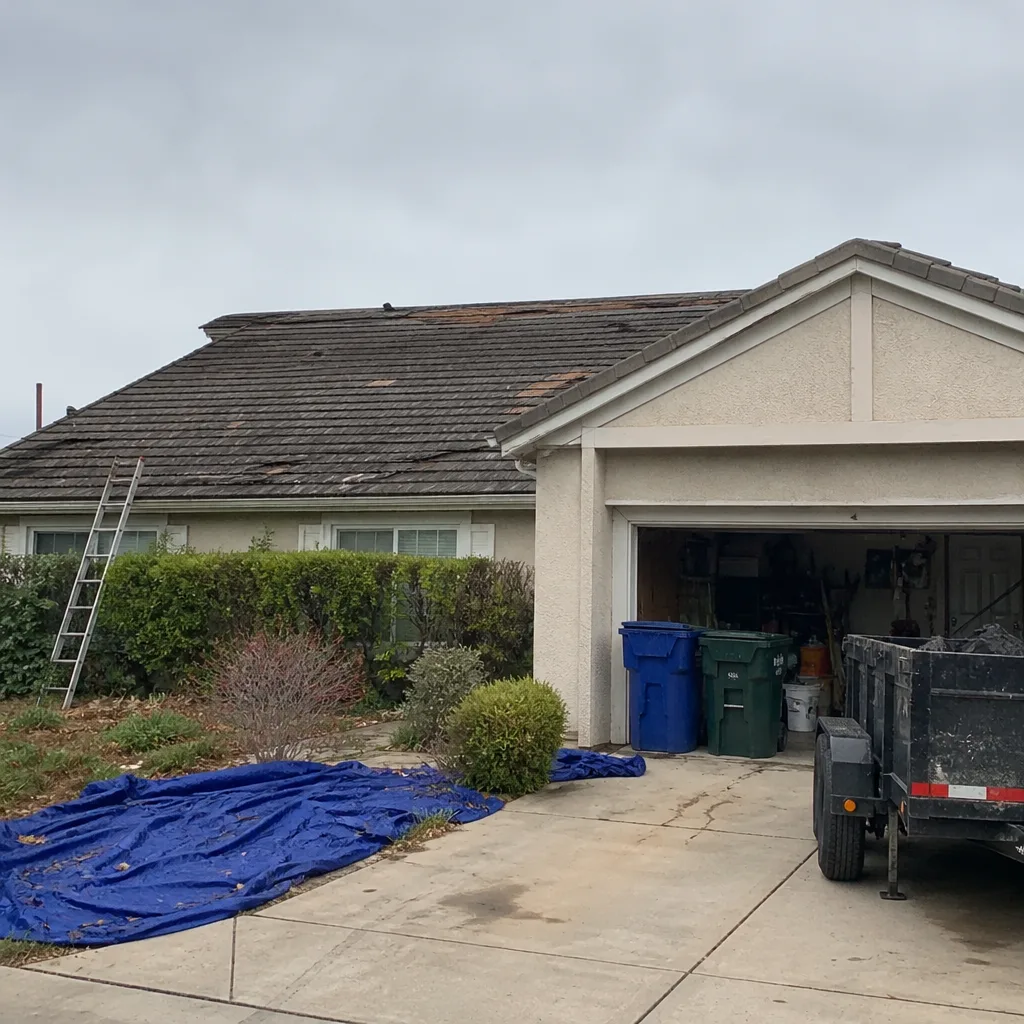 Before
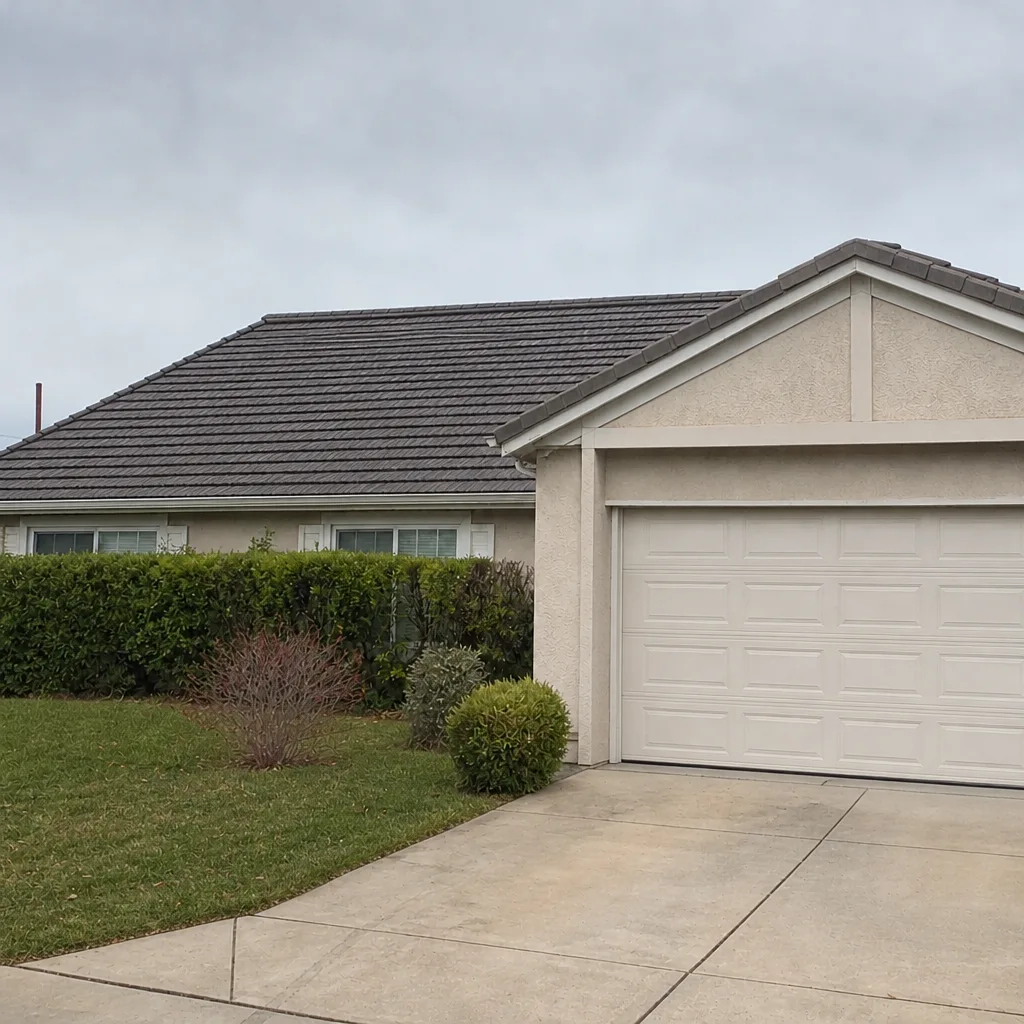 After
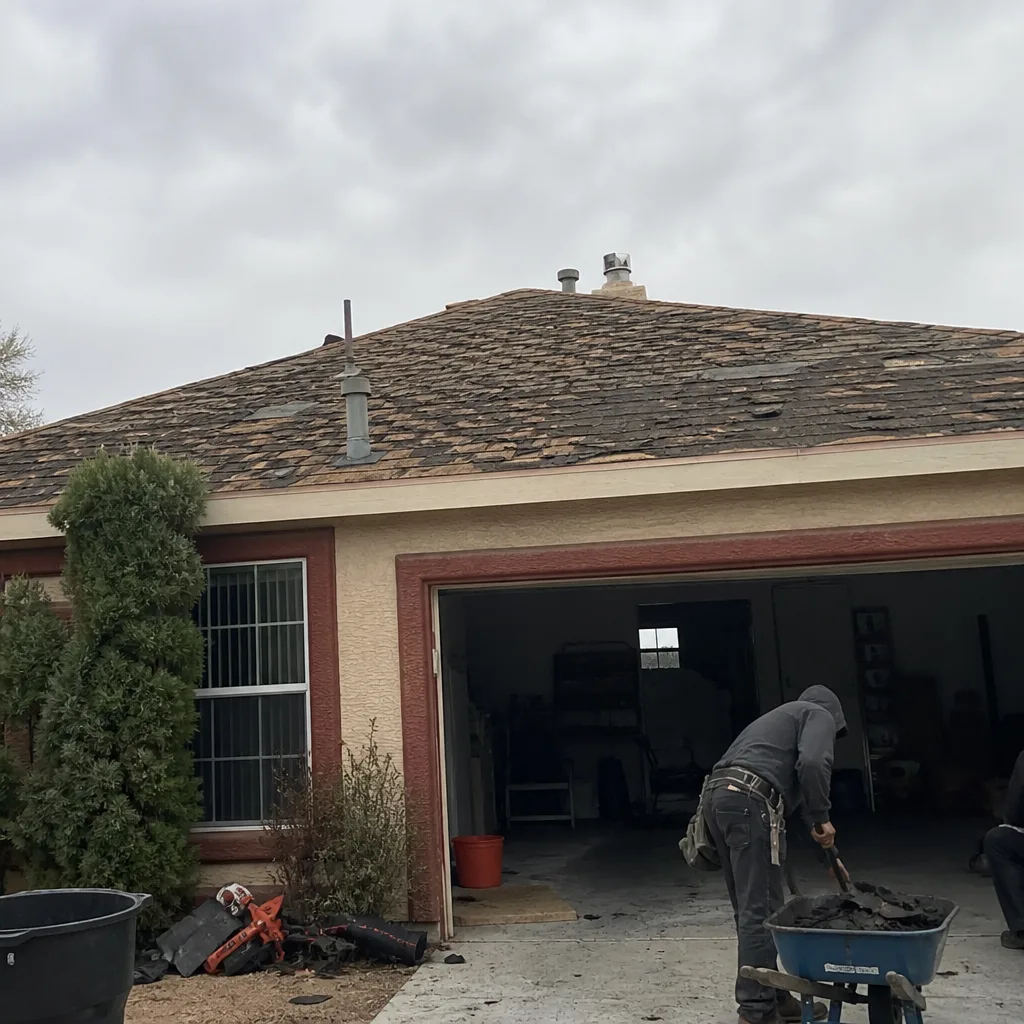 Before
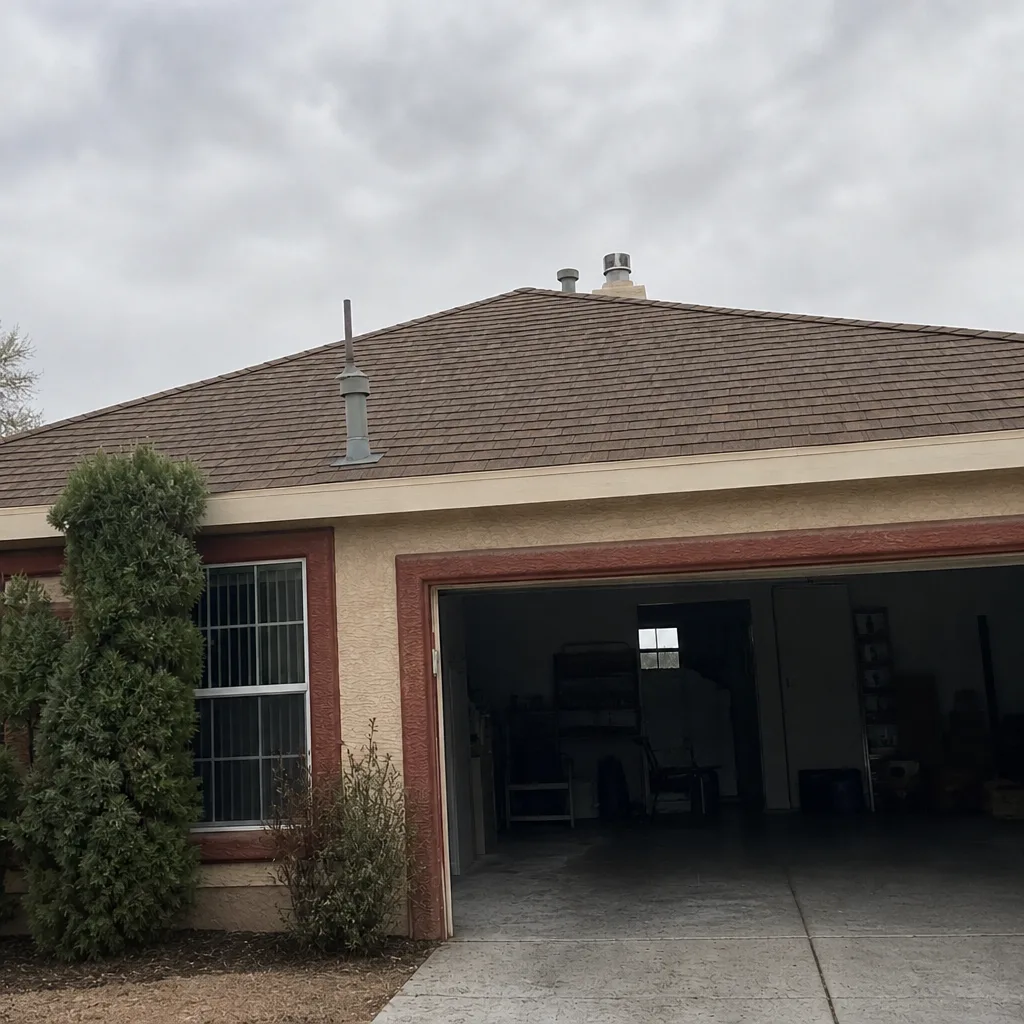 After
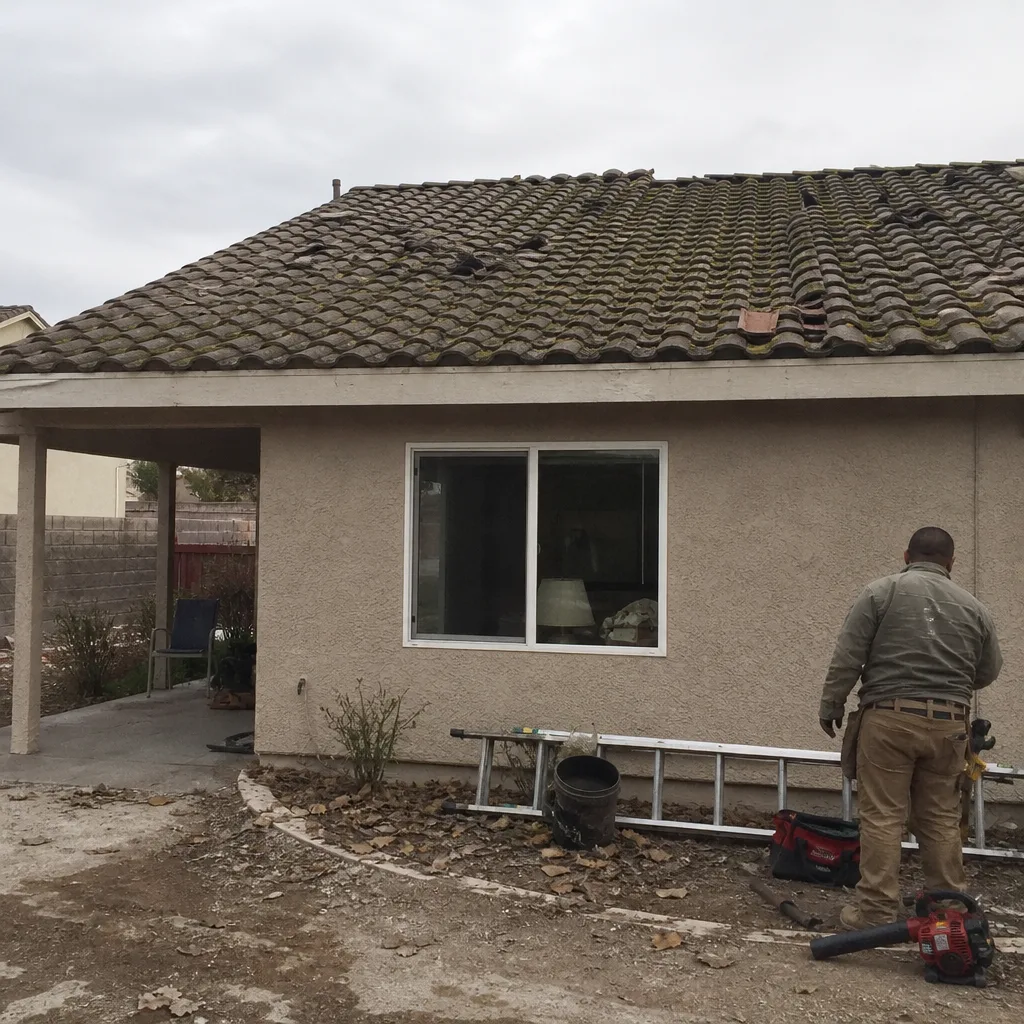 Before
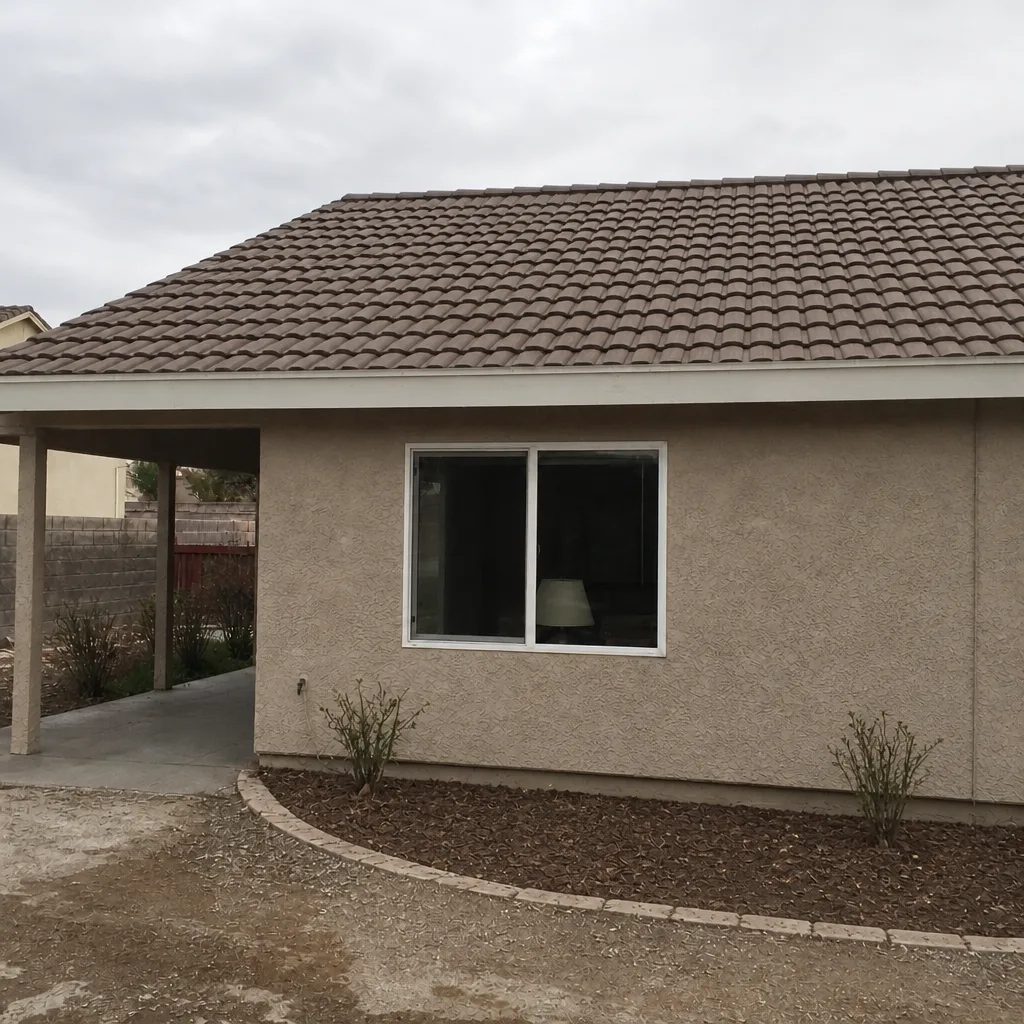 After
When to Call a Professional
Call a roofing professional when you see water staining on a ceiling, when a tile or shingle is visibly displaced after a wind event, when flashing pulls away from a wall or chimney, or when your roof has passed the point where a visual check tells you anything useful. Age alone is a reason to schedule an inspection, especially on a tile roof where the underlayment ages out of sight. Any sign of moisture inside the house is a reason to call today, not next month. Roofing Summerlin offers free estimates in Summerlin – call (833) 932-1305. We answer 24/7. Fast dispatch from 7am to 7pm, Sunday through Friday.
Frequently Asked Questions
Look the contractor up in the Nevada State Contractors Board’s public database and confirm the license is active and classified C-15 for roofing. Read the status history and any disciplinary actions, not just the active status. Ask the contractor for the license number in writing and verify it again before work starts. Call (833) 932-1305 for a free estimate and we will give you our license details up front.
Roof replacement costs in Summerlin depend on roof size, pitch, the number of existing layers to remove, the material you choose, and whether the decking needs repair. Tile, shingle and other systems price differently, and warranty tiers vary by product line. The written line-item estimate sets the final price, and the estimate is free. Call (833) 932-1305 for an exact quote.
Yes, in most Summerlin communities a roof replacement requires architectural review approval before work begins. The requirements vary by village, and the review can include material samples, color selections and manufacturer specs. Ask your contractor whether they have submitted to your community’s review process and who prepares the submittal. Call (833) 932-1305 to schedule a free estimate and we will walk through the approval step with you.
A manufacturer warranty covers defects in the roofing material, while a workmanship warranty covers installation errors. Most roofing leaks trace back to installation details, so the workmanship warranty is the one that applies to the most common failures. Get both in writing, with coverage levels and exclusions named. Call (833) 932-1305 to compare warranty tiers across brands before you choose.
A written line-item estimate with fixed pricing should hold unless the scope changes for a documented reason, such as damaged decking found after tear-off. That is why the estimate should include a defined per-sheet price for decking repair before you sign. Ask each contractor how they handle surprises under the old roof. Call (833) 932-1305 for a free estimate with the scope spelled out.
Roof replacement in Summerlin typically requires a permit and an inspection, and the contractor should handle both. Ask any contractor you interview whether permits and inspections are included in the bid, and confirm the estimate names them as line items. Call (833) 932-1305 for a free estimate.
The timeline depends on roof size, material, the number of layers to remove and the HOA approval window, which is often the longest part of the schedule in Summerlin. A realistic contractor builds the review period into the plan rather than promising a start date that ignores it. Call (833) 932-1305 for a free estimate and a realistic schedule for your roof.
Yes. A roof inspection is a legitimate standalone service, and a good contractor will tell you the roof has years left if that is the honest answer. We inspect first, and if repair is the right call we will say so. If it isn’t, we will show you why. Call (833) 932-1305 to schedule an inspection in Summerlin.
The Bottom Line
Hiring a roofer in Summerlin comes down to verification and comparison. Check the C-15 license yourself through the state board and read what the record actually shows. Ask the five questions about HOA approval, material breadth and whether the crew is in-house. Demand itemized bids, then compare them line by line to find what each one left out. Get both the manufacturer warranty and the workmanship warranty in writing, with coverage levels named. And if the roof’s condition is unclear, get a standalone inspection before anyone quotes a replacement. The contractors worth hiring will welcome all of it. The ones who resist are answering your question for you. For a full picture of services in the area, see Summerlin.
When you are ready to put an experienced team on the roof, Roofing Summerlin handles inspection, repair and replacement from first call to final shingle. We install seven manufacturer lines, including GAF, CertainTeed, Owens Corning and IKO, so your material choice follows your roof rather than our inventory. Estimates are free and written line by line, permits are pulled and inspections passed, and the workmanship warranty comes to you in writing. Call (833) 932-1305 to schedule your free estimate. We answer 24/7. Fast dispatch from 7am to 7pm, Sunday through Friday.
Written by the team at Roofing Summerlin.