
Last updated November 18, 2026
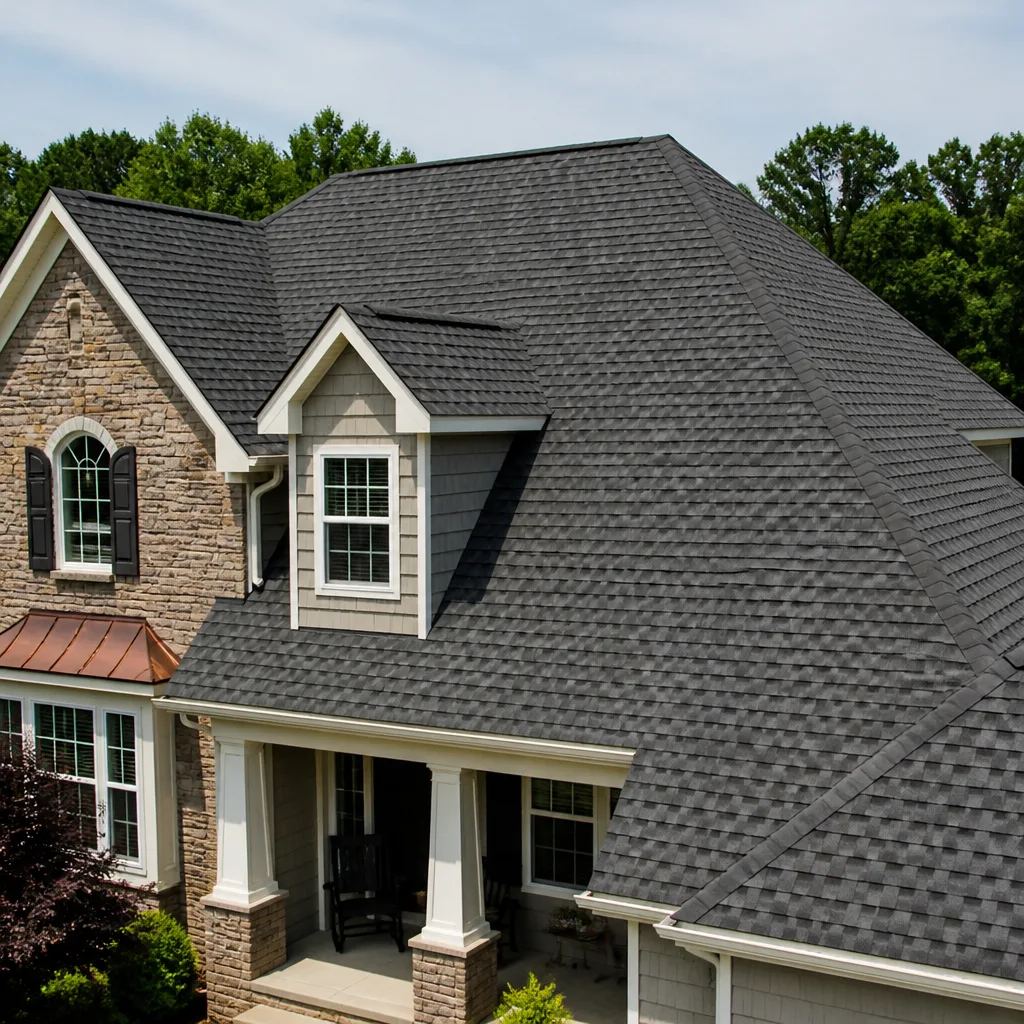 Architectural shingles
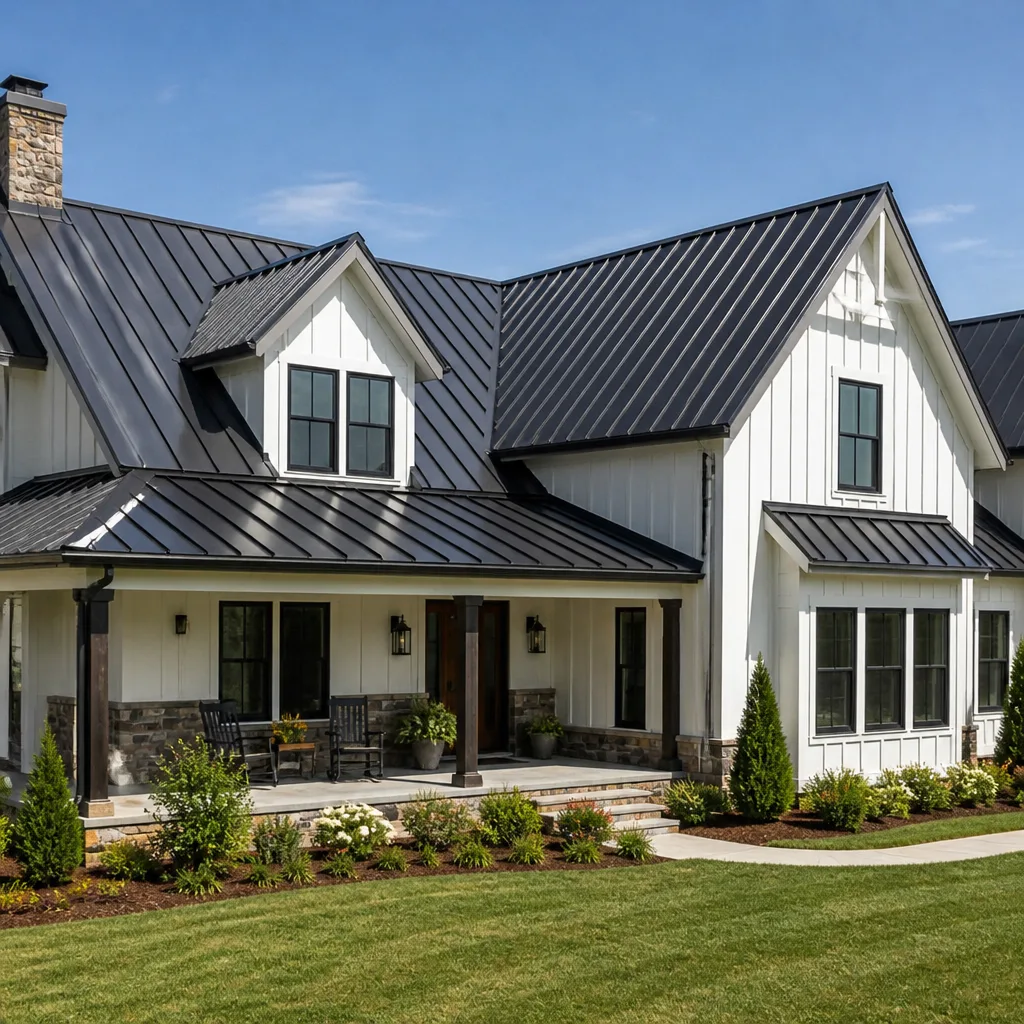 Metal roofing
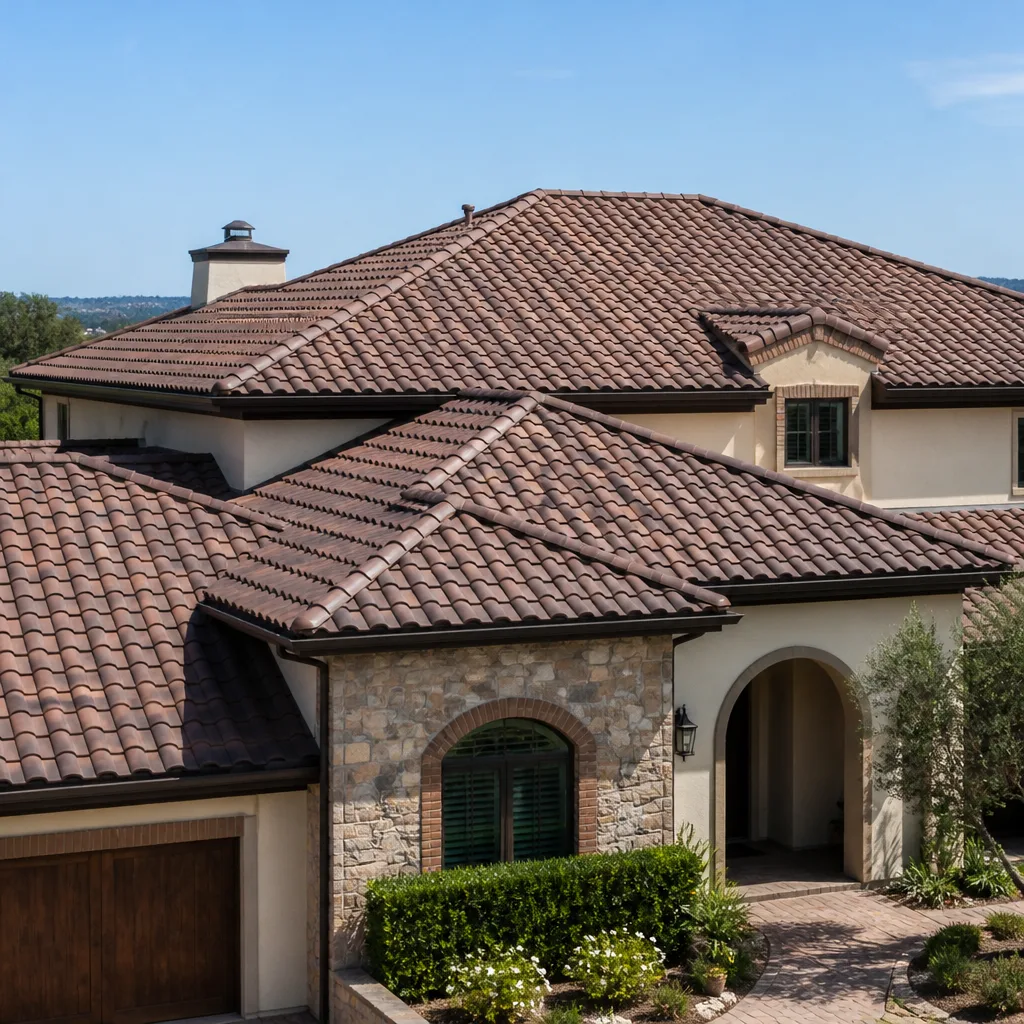 Tile roofing
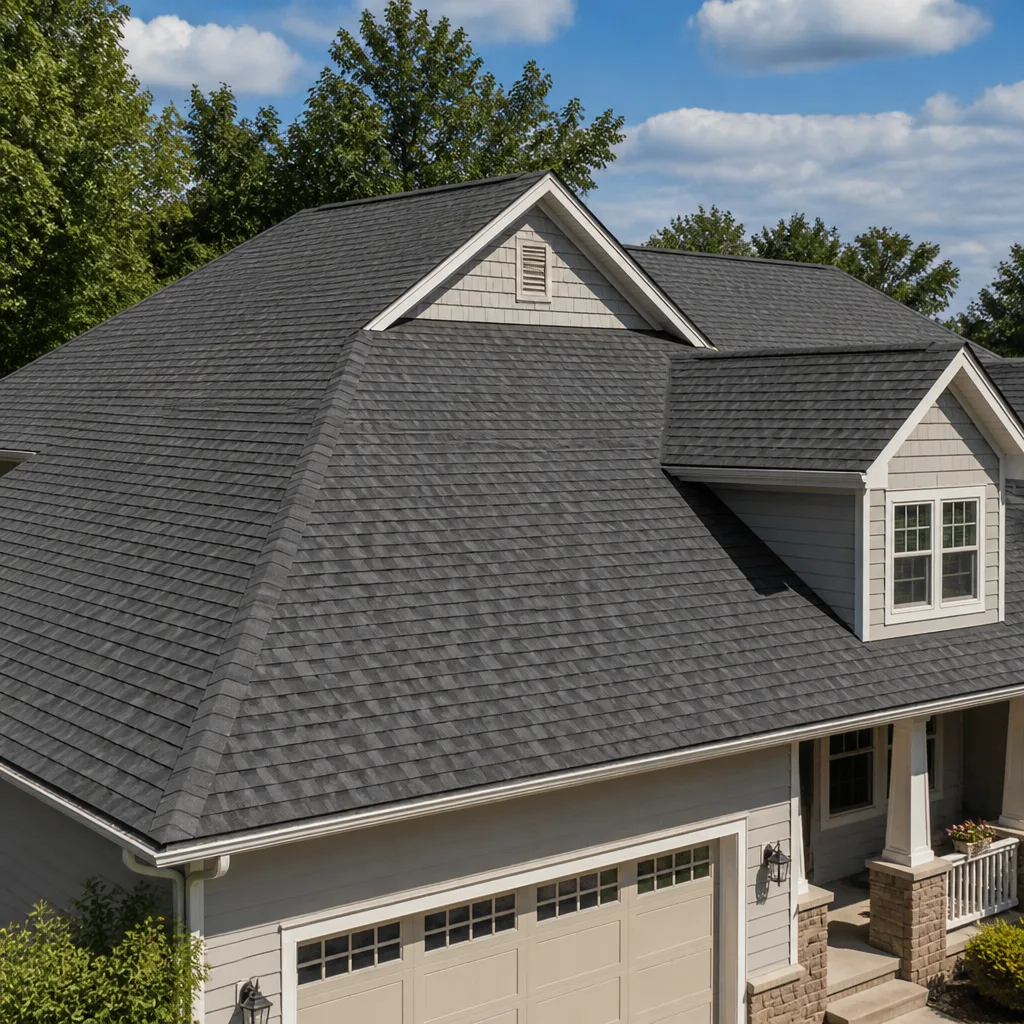 GAF
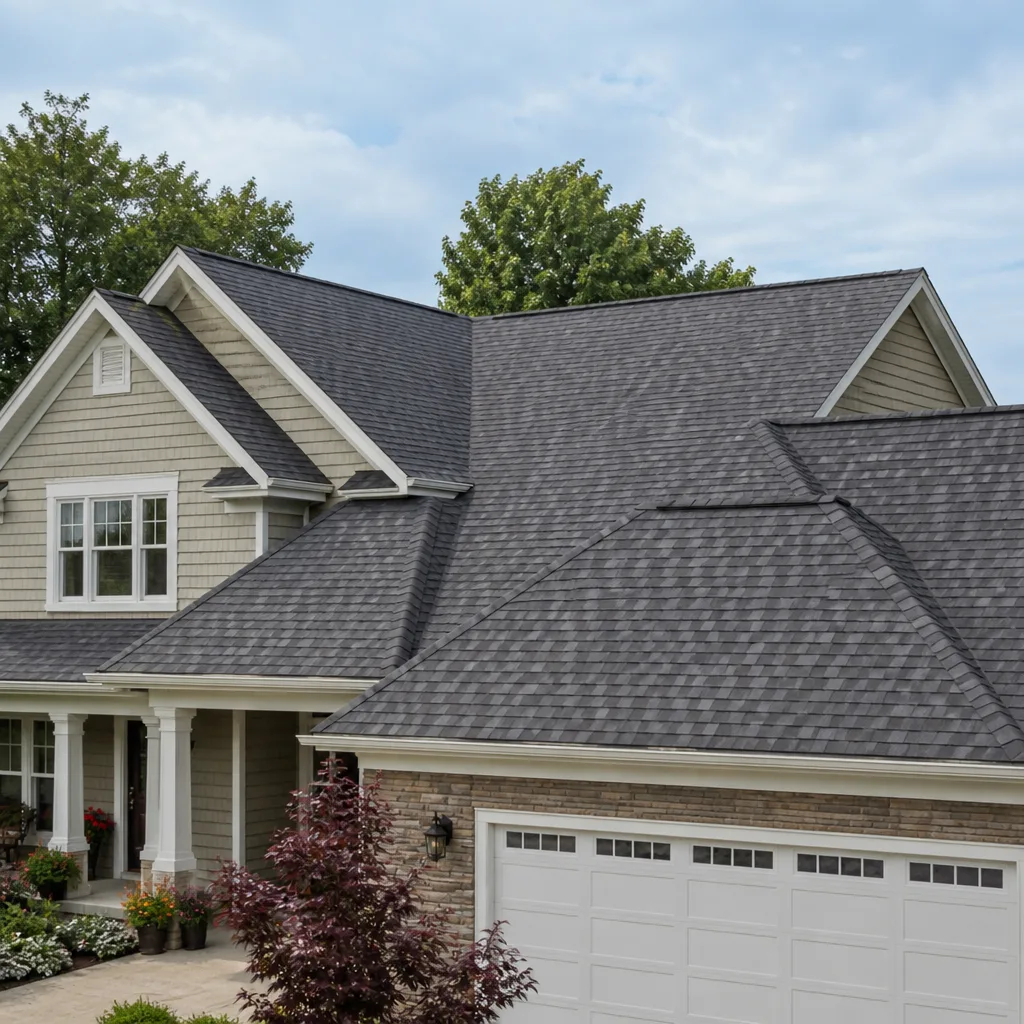 Owens Corning
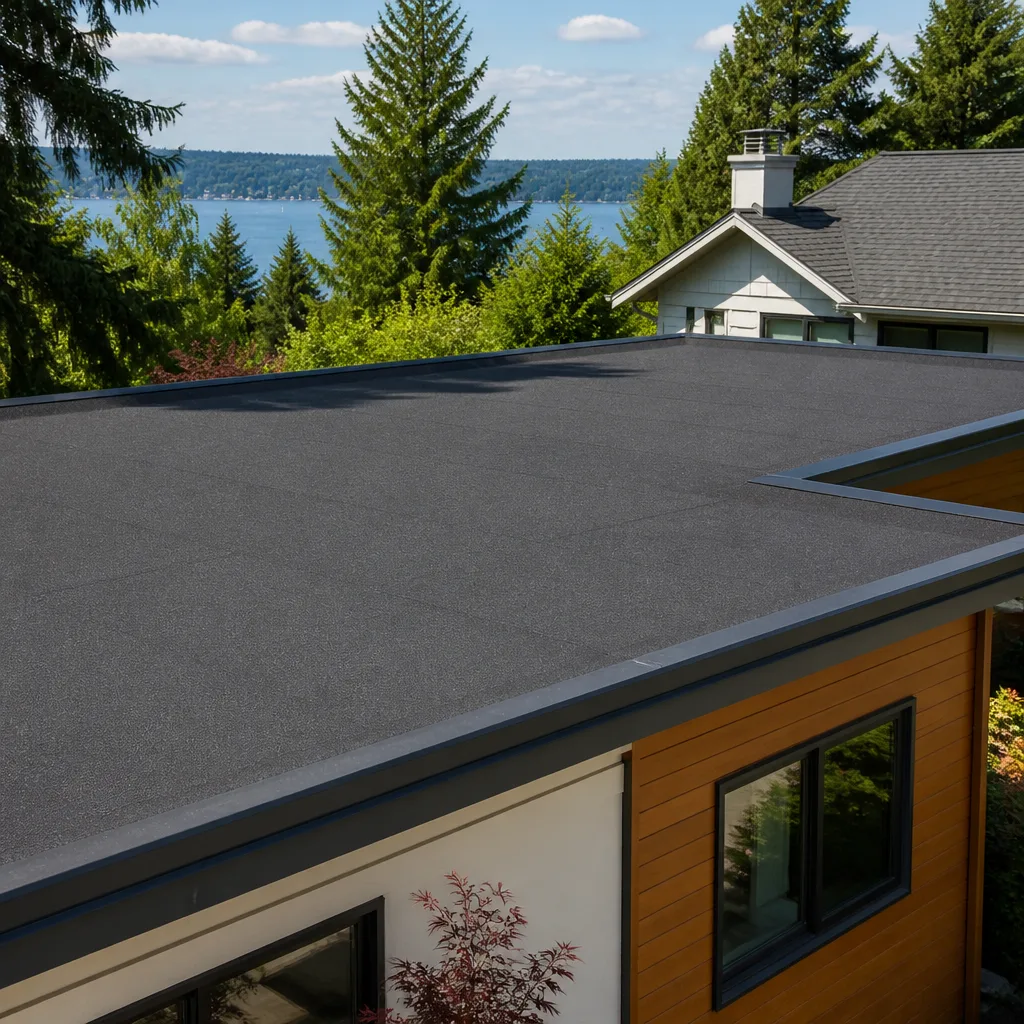 Flat & low-slope
Free roof inspection with deck photos before we talk money - GAF and Owens Corning certified installation
The Complete Roof Repair Guide for Summerlin Homeowners
Most roof repair guides you’ll find online are written for rainy climates: ice dams, snow load, storm-driven water backing up under shingles. That advice doesn’t fit roofs in Summerlin. Here, the roof’s biggest enemy is heat. Summer surface temperatures routinely push past 160°F, which changes how sealants cure, how flashing expands and contracts, and which materials survive a decade of thermal cycling. In this guide we’ll walk through how to triage a problem by category, why thermal movement causes most of the failures we see, when patching actually costs more than a system repair, and what a legitimate estimate should look like line by line.
Quick Answer
Roof repair in Summerlin should be triaged by category first: a cosmetic issue can wait weeks, a structural concern needs attention within days, and an active leak should be addressed now. Most repair decisions on Summerlin roofs are driven by thermal cycling and UV exposure rather than rain, and the right repair method depends on matching materials to the existing tile or flat roof substrate. A free written estimate that lists every line item is the only reliable way to compare quotes.
Styles & brands we work with
- Architectural shingles
- Metal roofing
- Tile roofing
- GAF
- Owens Corning
- Flat & low-slope
Table of Contents
- How to Triage a Roof Problem in Summerlin
- Why Heat, Not Rain, Drives Most Repairs Here
- Patch Repair vs. System Repair
- Material Compatibility for Tile and Flat Roofs
- What a Legitimate Repair Estimate Should Include
- Low-Slope and Tile Roof Considerations
- What a Professional Inspection Actually Involves
- Repair or Replace on an Aging Summerlin Roof
How to Triage a Roof Problem in Summerlin
Every roof problem falls into one of three categories, and knowing which one you’re dealing with tells you how fast to act. This is the single most useful thing a homeowner can learn about their roof.
Category 1: Cosmetic. Faded granules, minor surface staining, a cracked tile with no water entry underneath. These don’t threaten the structure and can typically wait for scheduling convenience. Watch them, note any change, and group them into a single visit rather than paying for repeated small calls.
Category 2: Structural. Sagging decking, a displaced ridge line, cracked or separated flashing at a wall transition, a popped fastener row. Structural issues don’t leak yet, but they will, and they get more expensive every month they’re ignored. Act within days.
Category 3: Active water intrusion. Staining on a ceiling, a drip during rain, water pooling where it shouldn’t. This is urgent because the damage compounds behind the surface. The visible stain is usually the last thing to appear and the first to be fixed; wet sheathing and insulation above it are the real cost.
A simple triage routine helps you place your problem:
- Note when you first saw the issue and whether it’s growing.
- Check the attic or underside for staining, dampness, or daylight.
- Look at the roof surface from the ground with binoculars. Do not walk the roof.
- Photograph what you can see and write down the roof’s age and material.
- Call for an inspection if you’re unsure of the category.
Why Heat, Not Rain, Drives Most Repairs Here
In Summerlin, a roof’s daily life is a cycle of expansion and contraction. Surface temperatures above 160°F in summer, cooling to evening lows before dawn. Every material on the roof moves slightly with each cycle: flashing, sealants, tile, decking. Over years, that movement wins.
What fails first, in our experience:
- Flashing at wall and penetration transitions. The metal and the material it’s set against expand at different rates, opening a hairline gap that walks wider over time.
- Tile cracking and slippage. Thermal stress plus occasional foot traffic plus settling produces hairline cracks that let water into underlayment the tile is supposed to protect.
- Sealant at penetrations. Boots around vents and pipe collars harden and pull away from surfaces. The sealant itself often fails before the vent does.
- Underlayment fatigue. Even with intact tile overhead, underlayment beneath is exposed to heat buildup and eventually wears out on its own timeline.
This is why a repair spec in Summerlin should be built for thermal movement: fasteners sized and spaced for the substrate, flashing set with appropriate clearance for expansion, sealants selected for high-temperature exposure rather than general-purpose. A generic repair that works in a cooler climate can fail here within a season or two. When we quote a repair, the specification matters as much as the price.
Patch Repair vs. System Repair
A patch fixes the visible failure. A system repair addresses the reason the failure occurred and the surrounding area likely to fail next. They cost differently, and they last differently.
A patch is right when:
- The roof is under roughly half its expected service life.
- The problem is isolated to one area with no matching wear nearby.
- The underlying substrate is dry and sound.
- The patch material is fully compatible with the existing system.
A system repair is right when:
- Multiple failures are appearing across the same area or the same roof plane.
- Underlayment or flashing beneath the surface has already failed once.
- The roof is nearing the end of its expected life and the patch is only postponing a larger job.
- The failure is in a system the roof depends on: valley, ridge, wall transition, or the field of a low-slope roof.
Here’s the arithmetic that catches homeowners out. A patch that costs a few hundred dollars is cheap if it ends the problem. If the same area needs another patch two or three times over five years, the combined cost begins to approach the cost of a proper system repair, and you’ve still got the water intrusion risk in the meantime. Patching isn’t wrong; it just needs to be the right decision, not the default one.
Material Compatibility for Tile and Flat Roofs
Not every patch product works with every substrate. This is where cheap repairs go wrong, and where a contractor who has installed a wide range of systems earns their keep.
For clay and concrete tile (common across many Summerlin neighborhoods), the tile is the weather shield; the underlayment beneath is the waterproofing. Patching the tile without addressing the underlayment leaves the real problem unsolved. Repairs need to match tile profile, thickness, and color closely enough to look native, and the underlayment patch must bond properly with the existing layer.
For low-slope and flat roofs (rolled products, modified bitumen, or single-ply membranes), the compatibility rules are stricter. Adhesives and patch membranes must be specified for the existing membrane chemistry. A patch that bonds today can lift within a hot season if the adhesive wasn’t rated for sustained surface temperatures in this climate.
For asphalt shingles, matching brand and shingle line matters for appearance and warranty. We install GAF, CertainTeed, and Owens Corning systems among the seven brands we work with, which means a repair on an existing shingle roof can often be specified with a compatible product from the same family.
The practical rule: describe your roof material and age accurately when you call, and ask specifically what product the contractor plans to use for the repair. A legitimate answer names the product. A vague answer doesn’t.
What a Legitimate Repair Estimate Should Include
A repair estimate should be a written, line-item scope of work that you can compare against another quote. If it’s a single number on a piece of paper, you can’t compare it meaningfully, and you have no protection if the scope shifts once work starts.
A complete estimate should list, at minimum:
- Diagnosis. What the inspection found, in plain language, referencing the specific location and cause.
- Scope of repair. Which surfaces are being opened, repaired, and closed, and how much area each item covers.
- Materials by name. The specific product being used for tile, underlayment, flashing, sealant, or membrane. Brand and product line, not “roofing materials.”
- Flashing and penetration treatment. Whether existing flashing is being replaced, resealed, or left in place, and why.
- Disposal and cleanup. Whether debris removal and haul-away are included or billed separately.
- Warranty terms. What’s covered, for how long, and whether the coverage is manufacturer-backed or workmanship-only.
- Exclusions. What’s explicitly not included so you aren’t surprised mid-job.
- Final price. A fixed number tied to the written scope, so the estimate and the invoice match.
Every roof is different, and every repair should be priced per job by the written estimate. What you should insist on is that the estimate is free, the scope is written, and the price doesn’t move once work begins.
Low-Slope and Tile Roof Considerations
Summerlin’s housing stock includes a high proportion of low-slope and tile roofs, and both present repair realities that generic guides skip.
Low-slope roofs rely on continuous membrane integrity and positive drainage. A repair on a low-slope roof needs to maintain both. Ponding water anywhere on the surface means either the slope has been compromised or the drainage path is blocked. Repairs that patch over ponding water without addressing the cause tend to come back.
Tile roofs are a two-part system: tile on top, underlayment below. Tile damage is obvious; underlayment failure is invisible until it leaks. On a tile roof of a certain age, the question isn’t whether the underlayment will fail but when. That’s why a proper inspection includes probing and checking beneath the surface where accessible, not just a visual pass from the ground.
Both roof types also benefit from ventilation being correct. In this climate, an under-ventilated attic accelerates heat degradation of everything above it. Boral tile systems and the shingle systems from the brands we install all perform best when the attic ventilation is specified to the roof. A repair inspection is a good time to check that the venting is doing its job.
What a Professional Inspection Actually Involves
An inspection done for its own sake, not as a sales step toward replacement, is the foundation of any good repair decision. Here’s what a real one should include:
- Roof surface walk or drone scan. Every plane, every valley, every penetration checked individually.
- Flashing inspection at all transitions. Walls, ridges, valleys, vents, skylights, and any penetration point.
- Attic or underside check. Staining, dampness, daylight, decking condition, insulation condition, and ventilation adequacy.
- Material condition assessment. Remaining service life estimate for each system: tile, underlayment, flashing, membrane, sealant.
- Photographic documentation. Every finding photographed so the homeowner sees what the inspector saw.
- Written condition report. Findings, recommendations by category, and an estimate for any repair work quoted.
We offer inspection as a standalone service, not as a sales funnel. If the answer is “this can be repaired and will last,” we say so. If the honest answer is “the repair will only delay a bigger problem,” we show you why. Material choice shouldn’t be driven by inventory; with seven brands on our roster, it’s driven by your roof and your budget. The full picture of what we do lives on our Roofing Summerlin page.
Repair or Replace on an Aging Summerlin Roof
The question homeowners ask most often is whether to repair or replace. The answer usually comes down to two variables: how much roof life is left, and how many failures are appearing at once.
Repair is the right call when:
- The roof is materially in good condition outside the repair area.
- The failure is isolated, not part of a pattern.
- The underlayment or membrane system is intact elsewhere.
- The repair can be specified to last, not just to close a gap.
Replacement deserves a serious look when:
- Multiple failures are showing up across different areas of the roof within a short span.
- Underlayment or membrane has already failed in more than one place.
- The roof is at or beyond its expected service life and repair costs are accumulating.
- Repair would only postpone a replacement you’re going to need within a few years anyway.
If you’re near that line, it helps to look at roof replacement as a comparison, not a foregone conclusion. A roof replacement is a 20-to-30-year decision. It deserves an honest conversation about materials, not a sales pitch. If repair is the right call, we’ll tell you. If it isn’t, we’ll show you why. And if repair is borderline, our roof repair team will talk through what a system repair would cost versus replacement, so you’re comparing real numbers.
Common Mistakes to Avoid
- Walking your own roof in summer heat. Tile surfaces can be hot enough to damage underfoot and unstable enough to be dangerous. Inspect from the ground with binoculars and call a professional for anything on the roof.
- Hiring for a single number without a written scope. A price without line items is a promise, not an estimate. You can’t compare it, and you have no protection if the scope changes.
- Patching tile without checking underlayment. The tile isn’t the waterproofing; the layer beneath it is. On an aging tile roof in Summerlin, the invisible layer is usually the one failing.
- Using general-purpose sealant at flashing. High-temperature exposure here accelerates the failure of sealants not specified for it. The fix that works this summer can fail by next.
- Assuming a repair will last forever. A repair restores function, not service life. Understanding the remaining life of the surrounding roof matters more than the repair price alone.
- Ignoring ventilation. Under-ventilated attics accelerate heat degradation of the roof above. An inspection that doesn’t check ventilation is only half an inspection.
- Waiting on a leak to confirm it’s real. Ceiling staining is usually the last symptom to appear; by the time you see it, the sheathing and insulation above have absorbed moisture for a while. Categorize and act.
See the difference
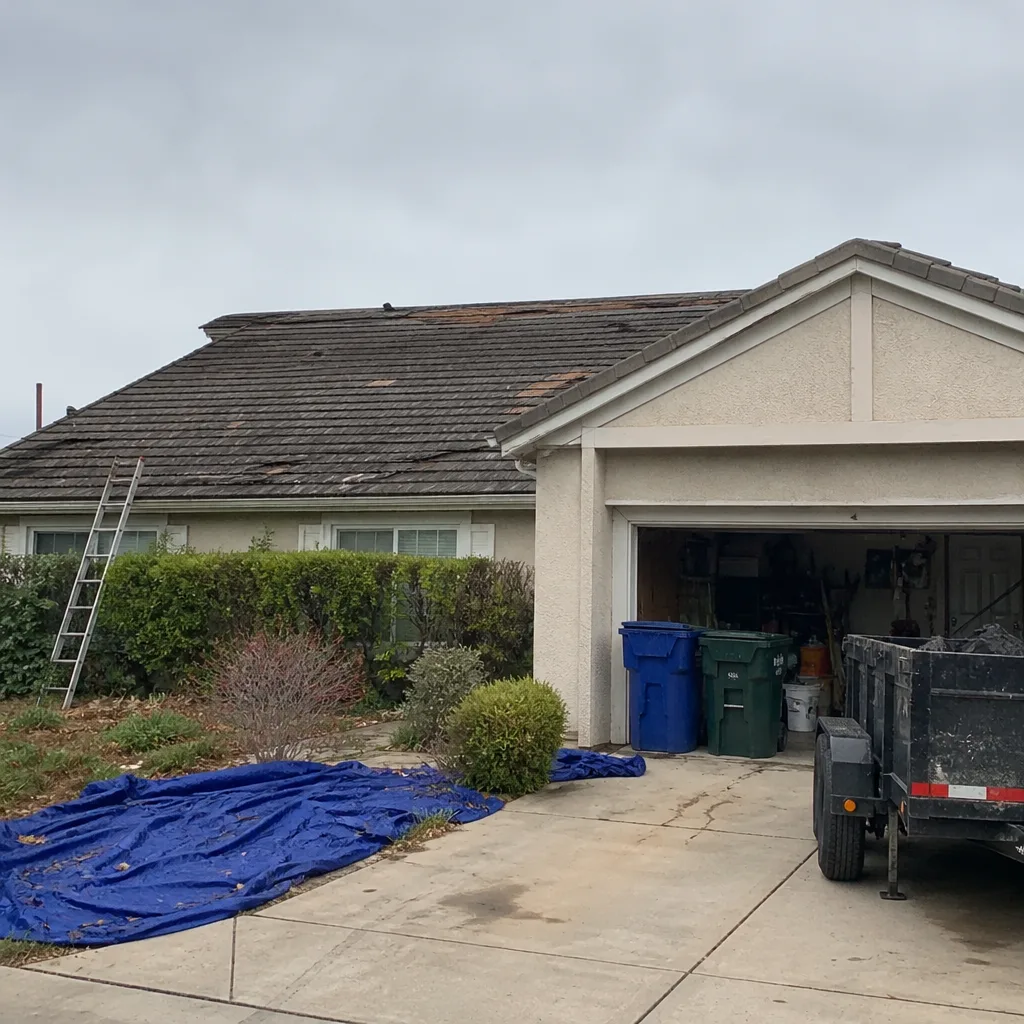 Before
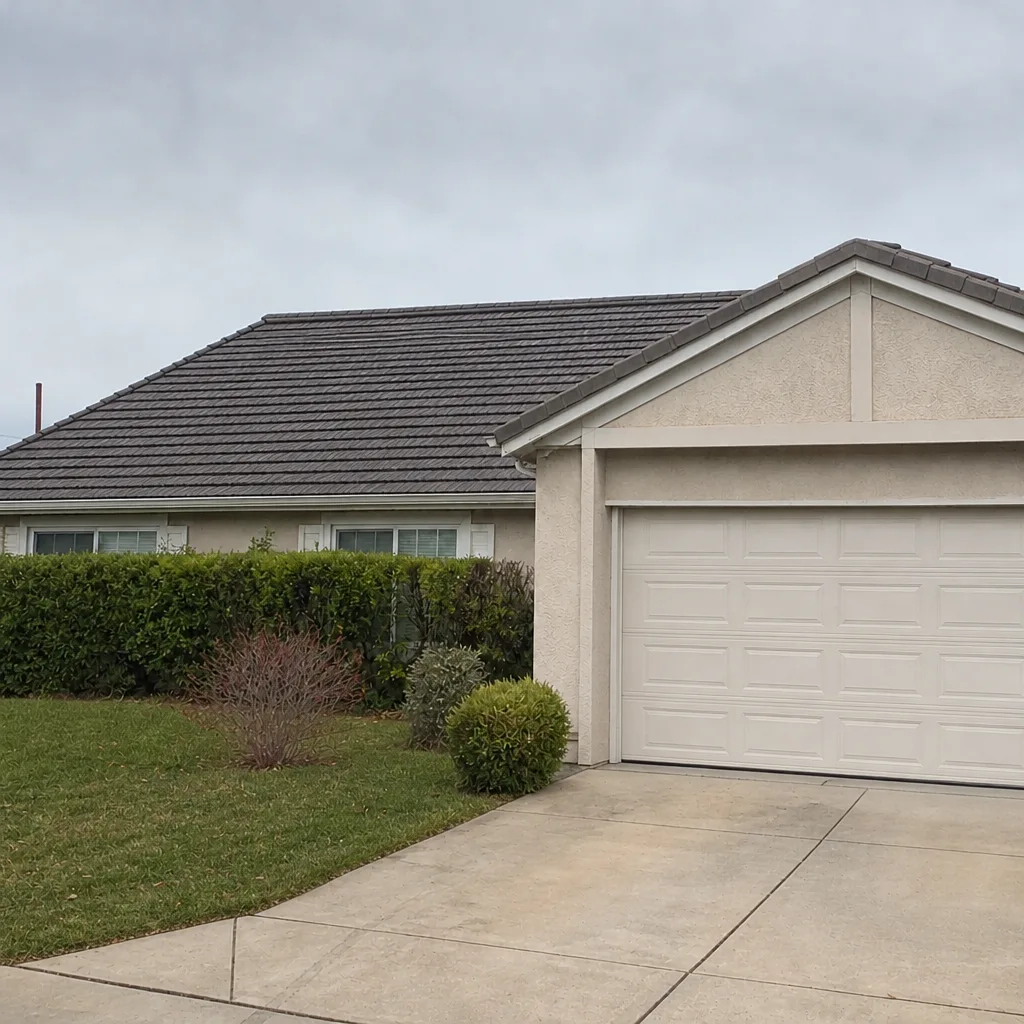 After
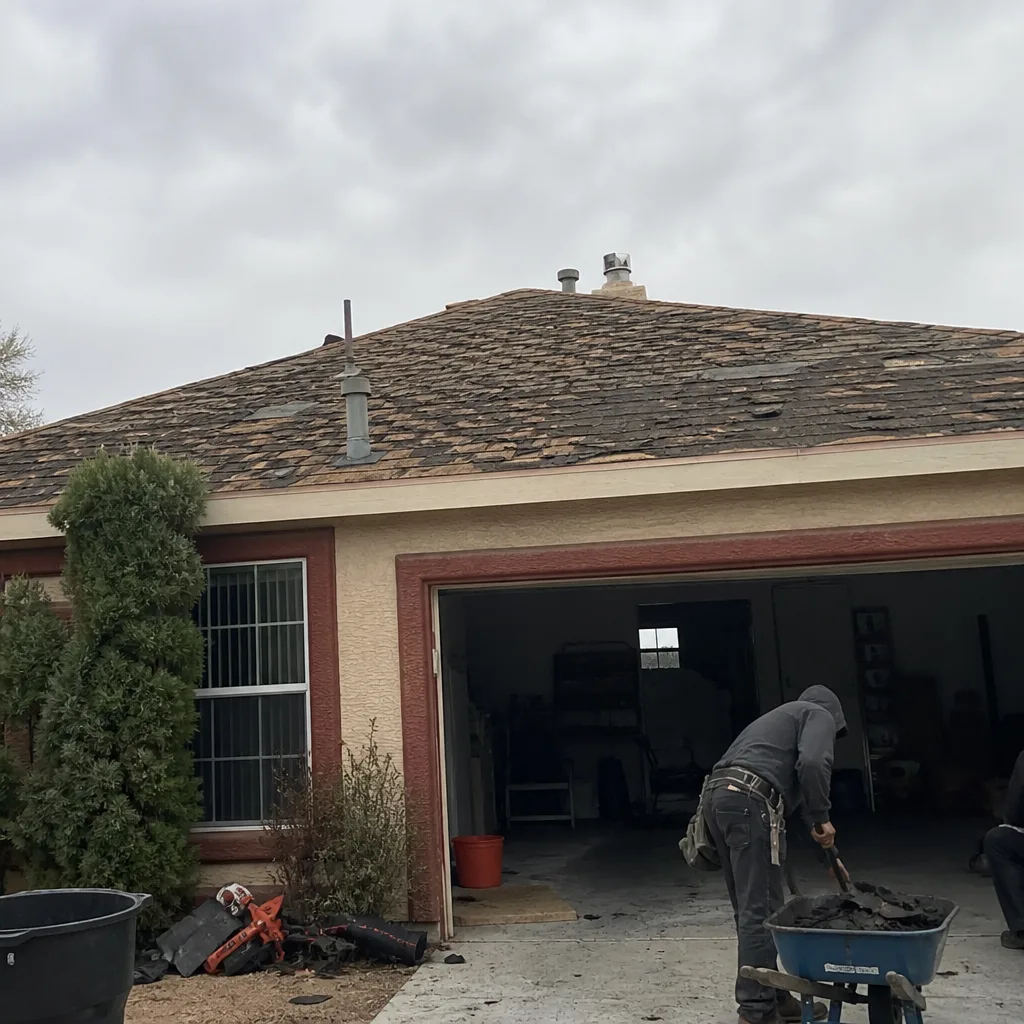 Before
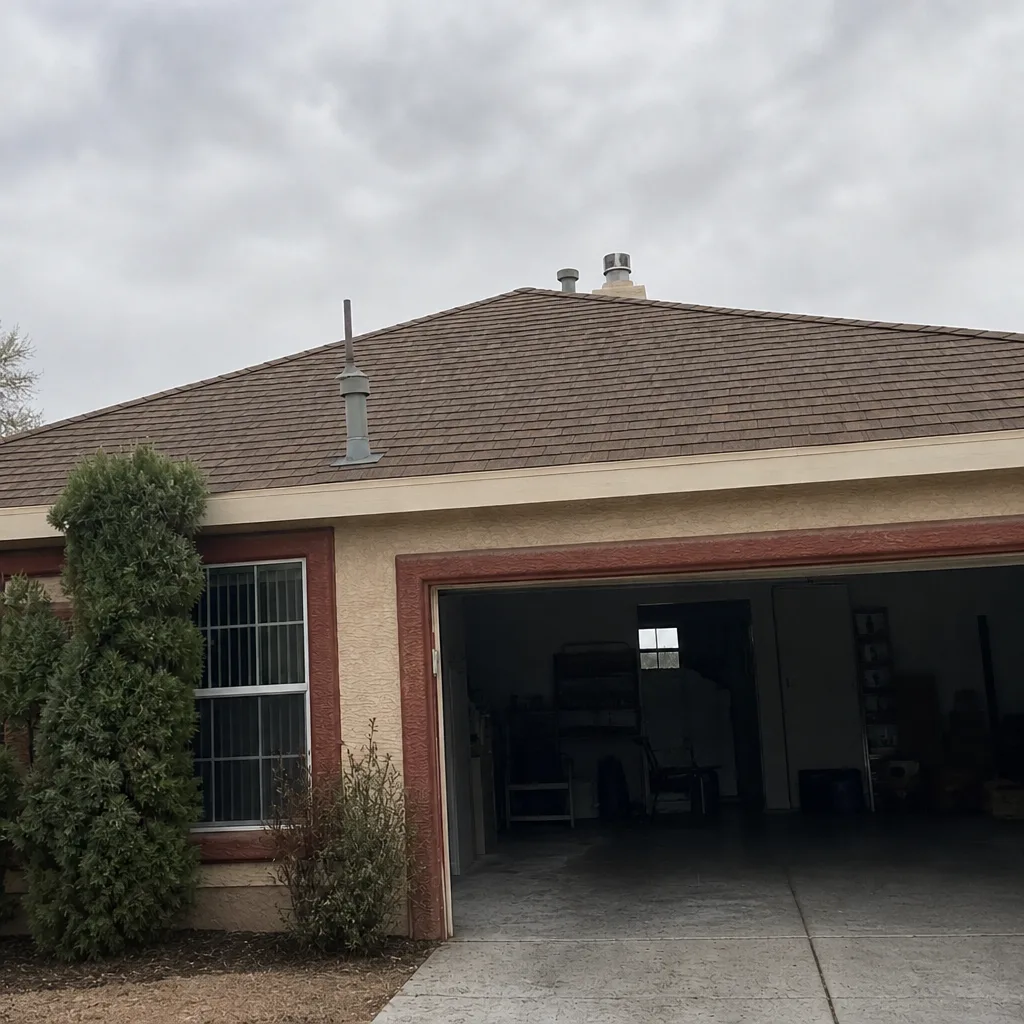 After
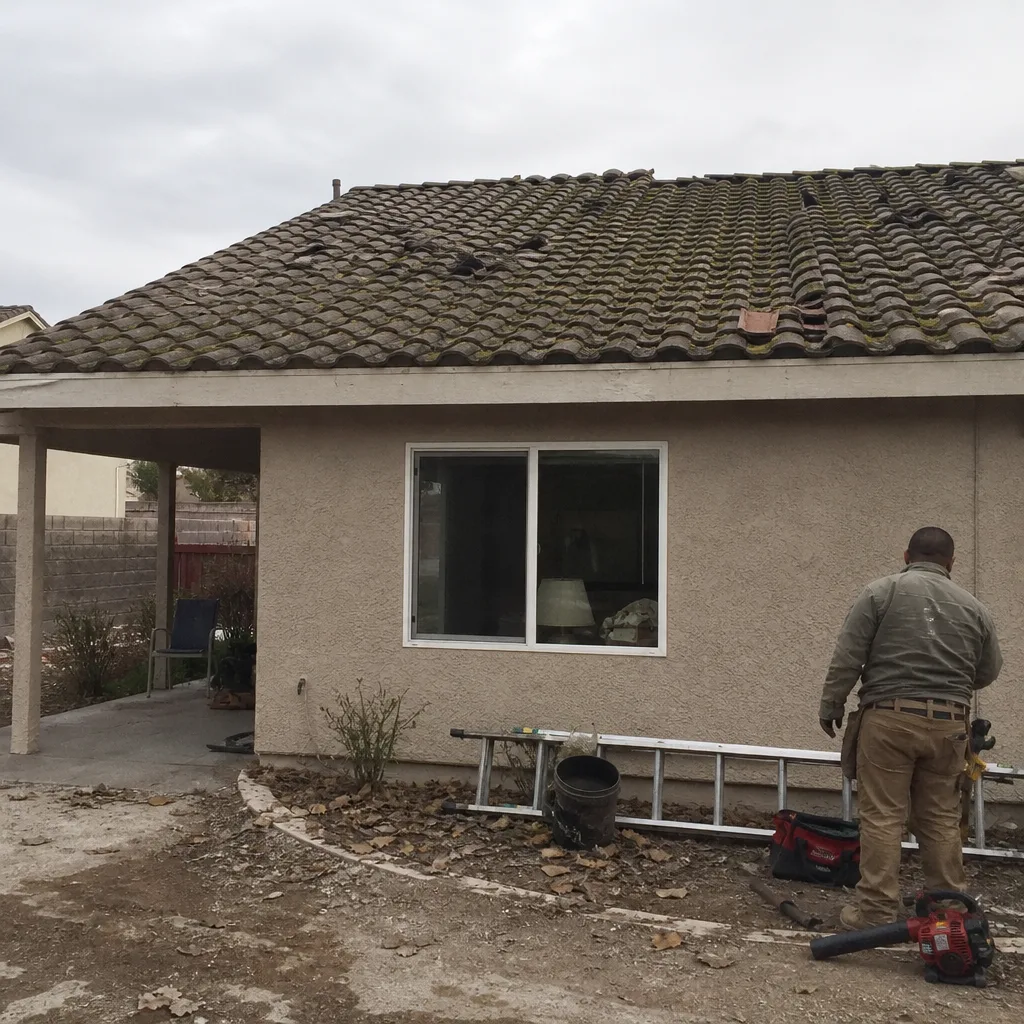 Before
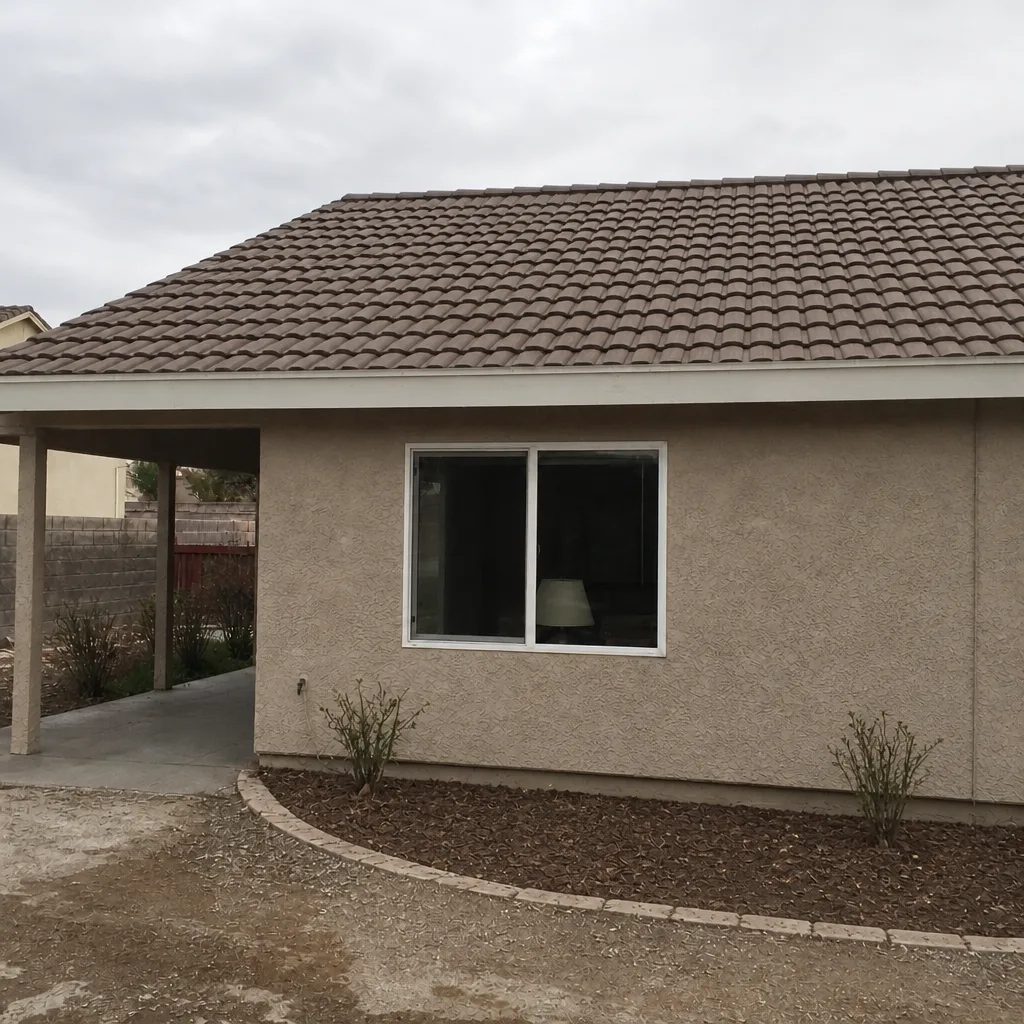 After
When to Call a Professional
Call a professional when you see any of the following: an active leak, ceiling staining, daylight in the attic, sagging roof structure, cracked or displaced flashing, missing or displaced tiles after wind, or a roof that’s past its expected service life and showing multiple small issues. Also call if you’re unsure – an inspection costs far less than letting a minor issue become a structural one. The safety side matters too: roofs in this climate get hot enough that only trained technicians should be on them. Roofing Summerlin offers free estimates in Summerlin. Call (833) 932-1305. We answer 24/7. Fast dispatch from 7am to 7pm, Sunday through Friday.
Frequently Asked Questions
Repair costs depend heavily on the category and the material system: a small cosmetic repair on a shingle roof and a system repair at a flashing transition on a low-slope roof are very different jobs. Because every roof is different, we price each job by a written estimate rather than quoting a number sight unseen. Call (833) 932-1305 for a free estimate. We answer 24/7. Fast dispatch from 7am to 7pm, Sunday through Friday.
No, when the scope is written correctly. A proper estimate is line-itemed and tied to a fixed price, so the invoice matches what you were quoted. If a legitimate hidden issue surfaces once the repair is opened up, that’s a separate conversation about scope, not a silent adjustment. Ask every contractor you talk to whether their pricing is fixed and whether they pull the required permits. Call (833) 932-1305 for an exact quote – estimates are free.
Most repairs are completed in a single visit. Cosmetic repairs and small patching take a few hours; larger system repairs take longer depending on the scope. The estimate should give you a clear time range for your specific job. Call (833) 932-1305 for a written estimate that explains what’s involved for your roof.
Where a permit is required for the scope, yes, we pull it and the work is inspected to code. Most municipalities require a permit for structural repair or full roof system work, and requirements vary by scope. Ask your city’s building department, and ask any contractor to state explicitly whether permits are included in the scope. Our written estimate always states it. Call (833) 932-1305 to schedule a free estimate.
Tile roofs can almost always be repaired, and the question is usually about the underlayment beneath the tile rather than the tile itself. Tile repairs on a roof with intact underlayment are routine; if underlayment has already failed across a large area, replacement of that section may be the honest answer. We assess both the tile and the layer beneath before recommending anything. Call (833) 932-1305 and we’ll schedule a free inspection.
We answer 24/7. A call outside dispatch hours is booked into the next opening, Sunday through Friday, 7am to 7pm. Fast dispatch from 7am to 7pm, Sunday through Friday. The dispatch timing doesn’t change what the repair costs; the price is set per job by the written estimate. Call (833) 932-1305.
The Bottom Line
The roof on your Summerlin home faces a very different set of stressors than the ones most repair guides are written for. Heat, UV, and thermal cycling drive more failures here than rain does, and the right repair depends on matching materials to your roof’s existing system. Triage first: cosmetic, structural, or active leak. Then decide between a patch and a system repair based on the remaining life of the roof. Get a free written, line-item estimate before any work begins, and choose a contractor whose recommendations are driven by your roof and your budget, not by whatever’s easiest to sell. With seven top-tier brands on our roster – GAF, CertainTeed, Owens Corning, and others – that’s exactly how we work.
Call (833) 932-1305 for a free estimate on your Summerlin roof. We answer 24/7. Fast dispatch from 7am to 7pm, Sunday through Friday. Inspection, repair, and replacement, handled by one team from first look to final shingle.
Written by the team at Roofing Summerlin.