
Last updated November 18, 2026
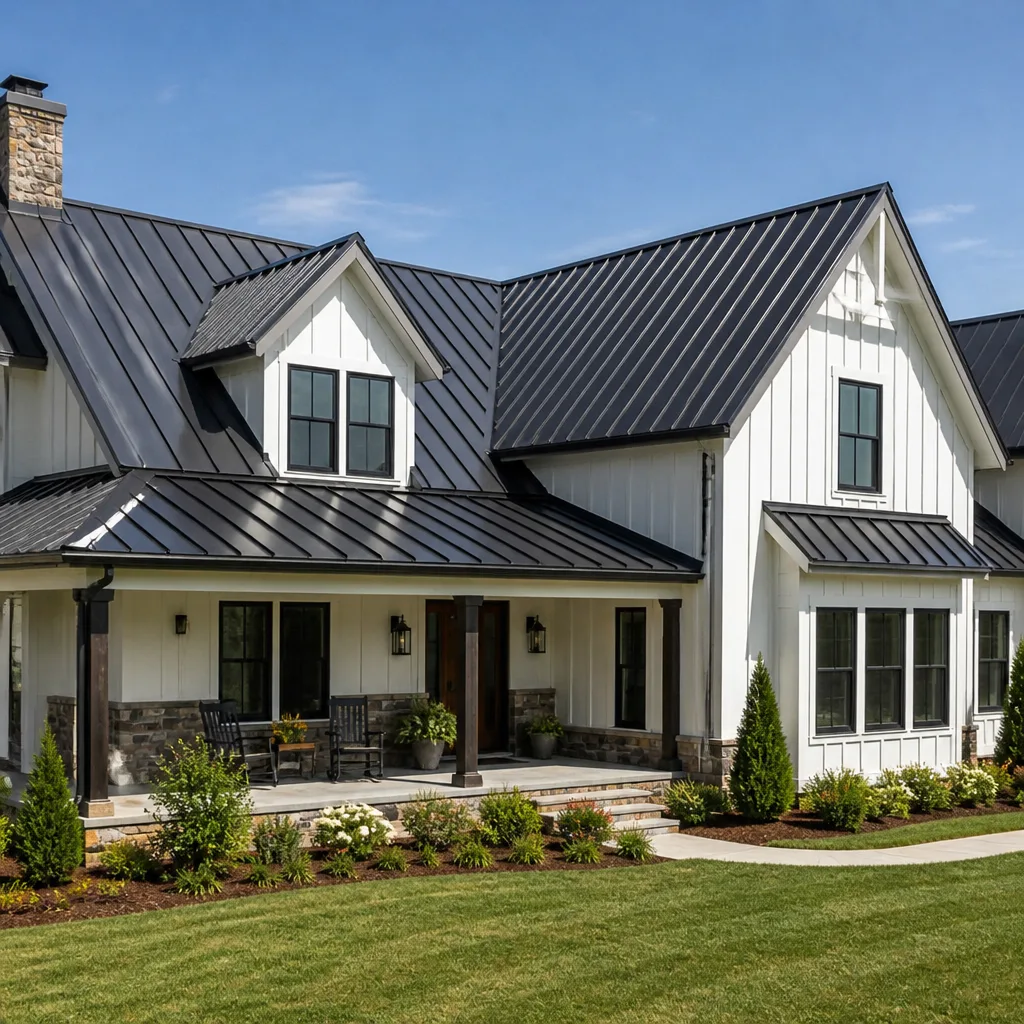 Metal roofing
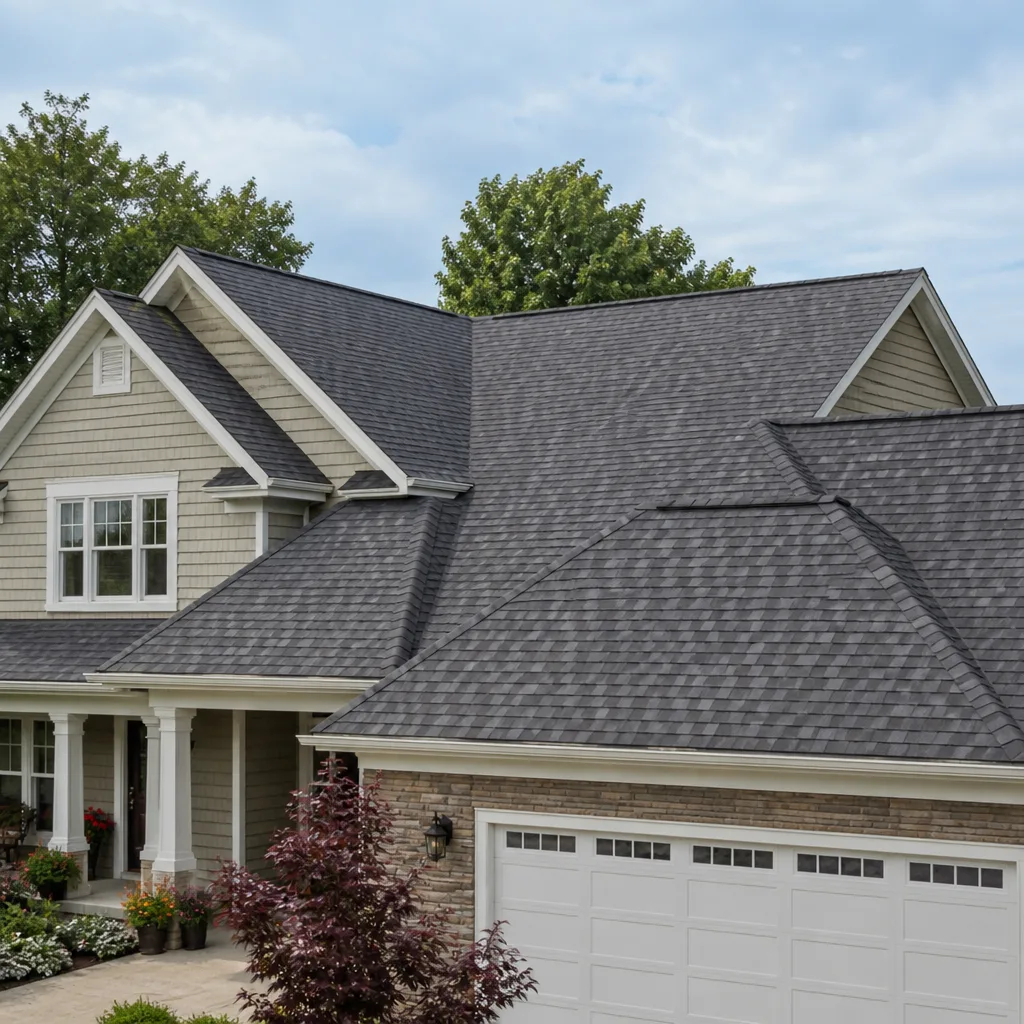
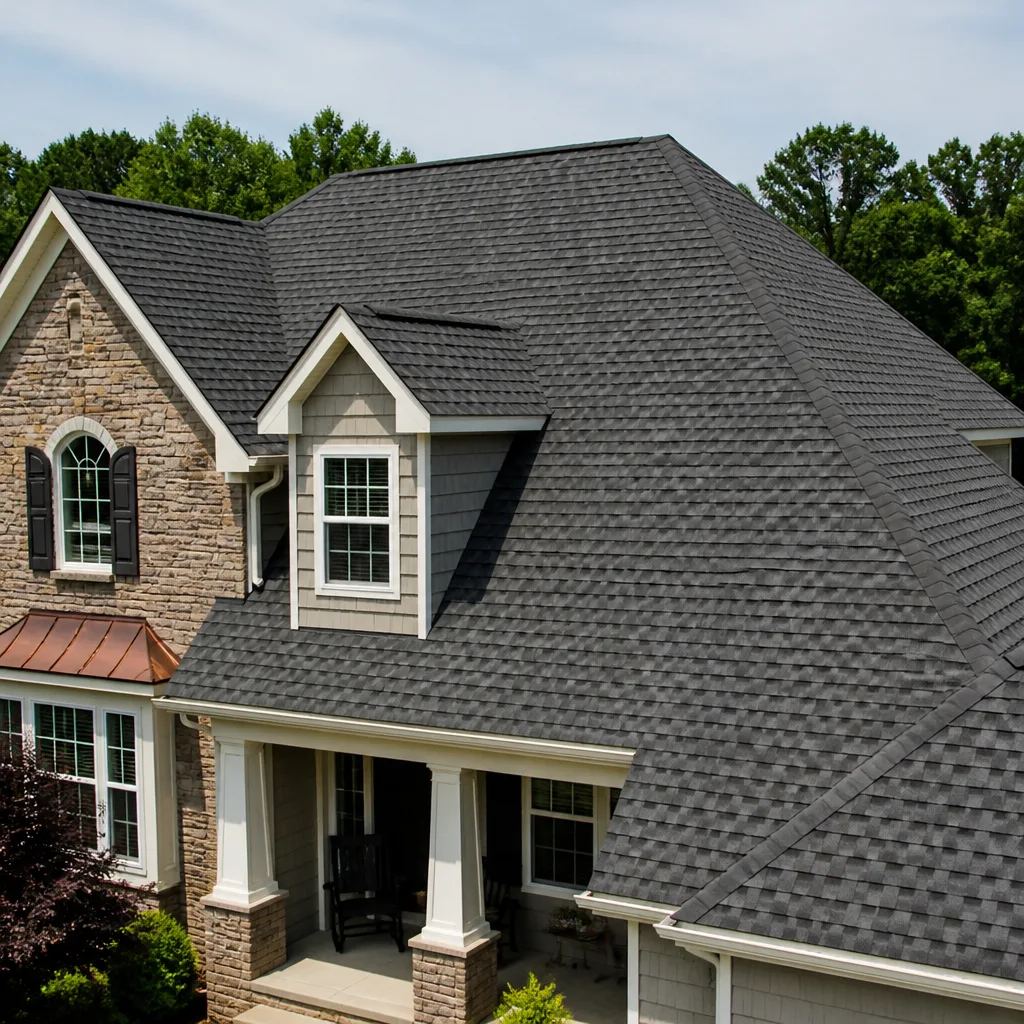 Architectural shingles
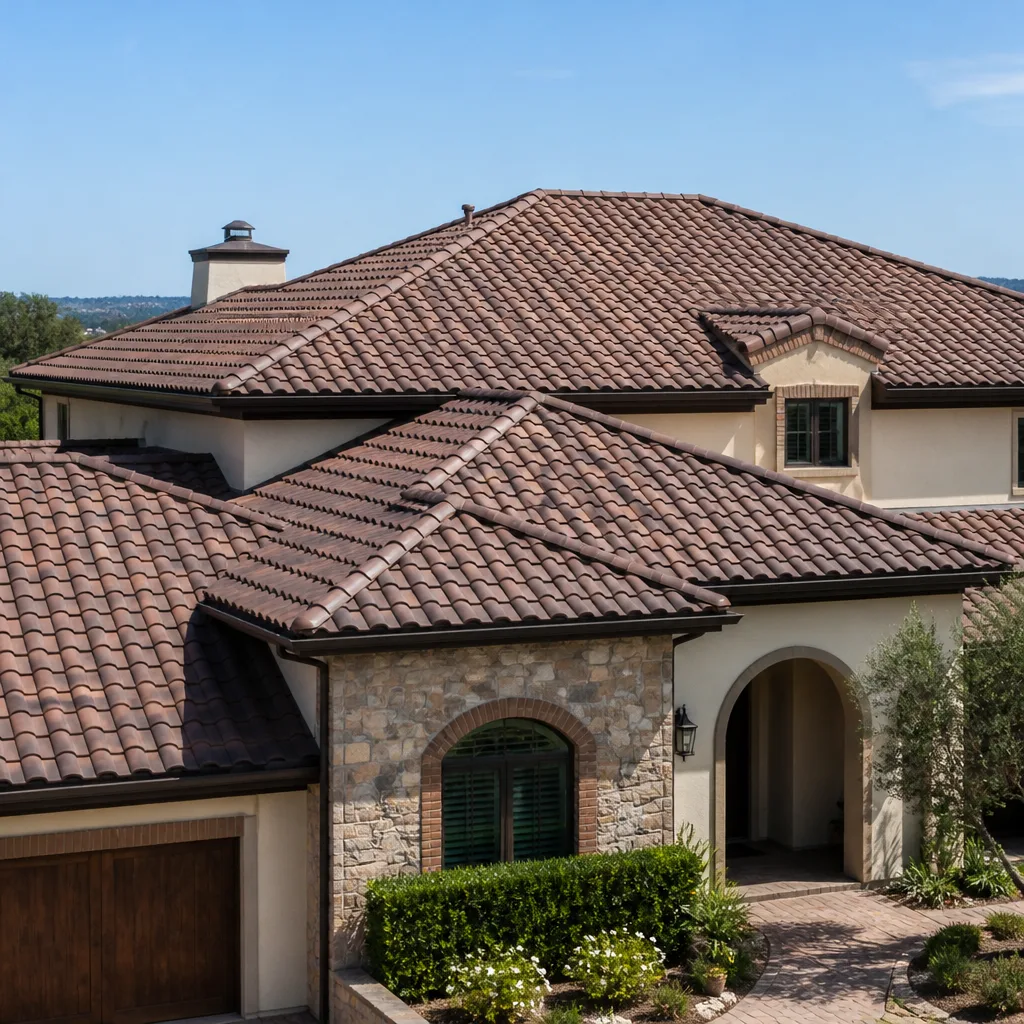 Tile roofing
 GAF
 Owens Corning
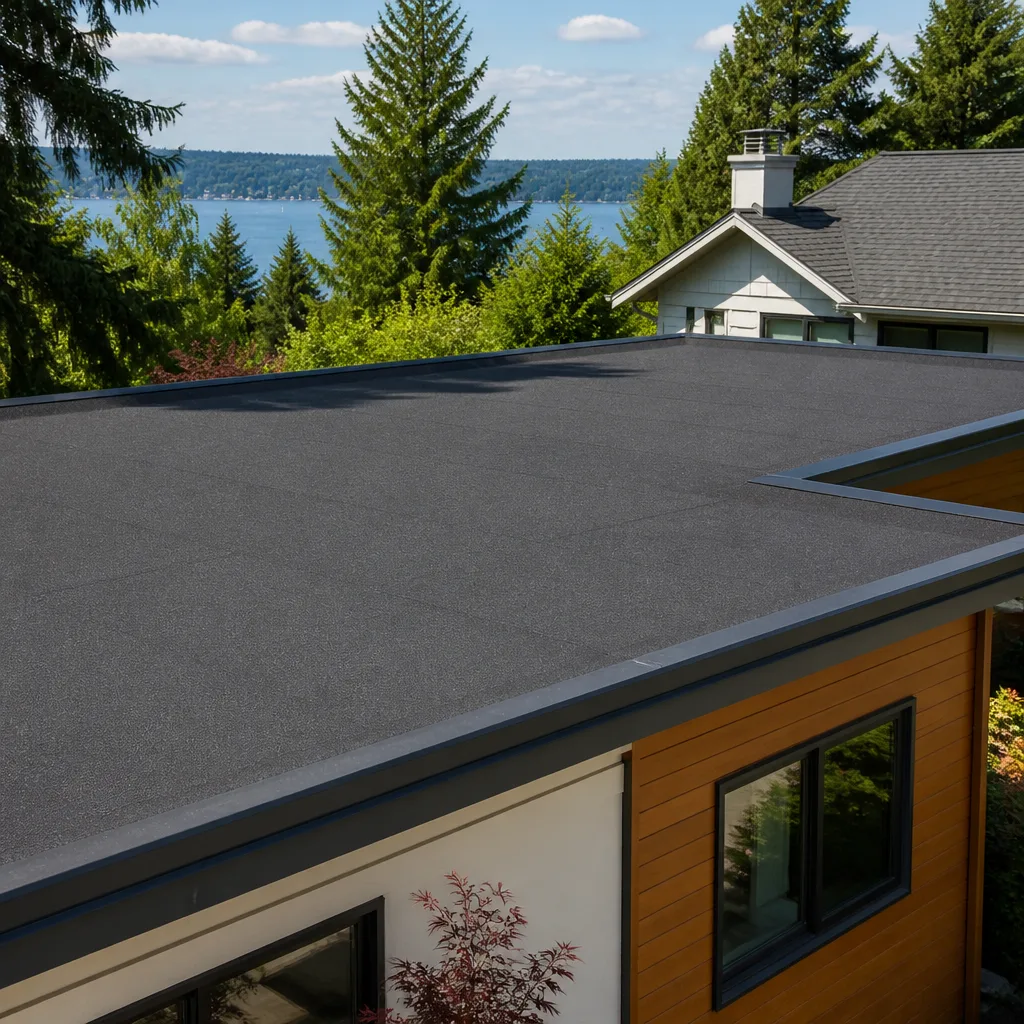 Flat & low-slope
Free roof inspection with deck photos before we talk money - GAF and Owens Corning certified installation
Roofing Permits, Codes & Inspections in Summerlin, NV: What You Need to Know
Most homeowners assume the permit is the contractor’s problem. It is, right up until the day the house sells. A re-roof in Summerlin that skips the building department doesn’t just risk a stop-work order while shingles sit exposed; it can appear years later as an unpermitted improvement on a disclosure form, and the seller inherits the problem. The permit record follows the property, not the person who signed the contract. This guide walks through which roofing scopes in Clark County actually need a permit, what inspectors look at and when, how Nevada’s energy code applies to a full replacement, where Summerlin’s architectural review fits in, and the exact questions to ask before you sign anything.
Quick Answer
In Clark County, a full roof replacement or any structural re-roof generally requires a building permit, while a straight repair that replaces like-for-like material without altering the structure typically falls under a repair exemption. Roofing permits are pulled by the licensed contractor, inspected at defined stages, and closed out only after the work passes. Summerlin adds a layer most homeowners don’t expect: HOA architectural review runs alongside the building permit and does not replace it. Confirm in writing who pulls the permit before signing a contract, and confirm whether your scope triggers the energy code requirements that apply to full replacements.
Styles & brands we work with
- Architectural shingles
- Metal roofing
- Tile roofing
- GAF
- Owens Corning
- Flat & low-slope
Table of Contents
- Does roofing work in Clark County require a permit?
- Where the repair exemption line actually gets drawn
- How the Clark County roofing inspection process works
- Energy code and cool-roof requirements on full replacements
- How Summerlin HOA architectural review intersects with permitting
- What to ask a contractor about permit responsibility
- What happens when a roof is done without a permit
- Getting the permit closed out properly
Does roofing work in Clark County require a permit?
A full roof replacement in Clark County requires a building permit. So does a re-roof that changes the roof covering type, adds or alters decking, or touches anything structural. The permit exists so that a building inspector can verify the work meets the applicable code before it disappears under shingles and underlayment, where nobody can inspect it later. When we pull a permit for a roof replacement in Summerlin, the inspection sequence is built into the job schedule from the start, not treated as an afterthought.
The confusion usually starts with the word “repair.” Homeowners hear it and assume no permit is involved. Sometimes that’s true and sometimes it isn’t, and the difference has nothing to do with how big the invoice is.
Scopes that generally require a permit
- Removing and replacing the entire roof covering, whether shingle, tile, or flat membrane
- Changing the roof covering material – for example, moving from tile to composition shingle or to a flat system
- Replacing or adding roof decking or sheathing
- Altering roof structure, including adding or modifying ventilation that penetrates the deck
- Certain overlay installations, depending on what’s already on the roof and how many layers exist
Scopes that usually fall under a repair exemption
- Replacing individual damaged shingles or tiles with matching material
- Sealing or repairing localized flashing around a vent or chimney
- Patching an isolated leak area without changing the roof system
- Replacing a small section of underlayment at a repair point
The honest answer is that the line sits at “same material, same footprint, no structural change.” Anything that crosses that line is a re-roof in the eyes of the building department, and it needs a permit. The only reliable way to know which side of the line your job falls on is to confirm it with the building department before work begins, and a contractor who has done this before in Summerlin knows exactly how to phrase the question. When in doubt, permit it. The cost of a permit is small compared to the cost of discovering years later that your roof was never signed off.
Where the repair exemption line actually gets drawn
The repair exemption is real, and it exists for good reason: nobody should need a permit to replace a handful of storm-damaged shingles. The problem is that the exemption is often stretched to cover work that is, in substance, a partial or full replacement. A good rule of thumb: if a homeowner is replacing more than a small, localized area, or if the work changes the way the roof sheds water, it’s a re-roof, not a repair.
Two specific cases trip people up in Summerlin. First, tile roofs. Tiles crack and lift in desert heat, and a homeowner might reasonably think replacing several dozen cracked tiles is a repair. That can be true, as long as the underlayment beneath them isn’t being replaced and the tiles themselves are a matching profile and type. The moment the job becomes “lift the field, replace the underlayment, lay new tile,” it’s a re-roof. Second, flat or low-slope sections – patio covers, second-story flat roofs, and transitions between a sloped plane and a flat one. These are often at the heart of a leak complaint, and a homeowner asks for “just the leaking part.” Repairing the transition detail is a repair. Replacing the whole flat membrane isn’t.
If a contractor tells you a full re-roof doesn’t need a permit, that’s a signal to slow down and ask more questions. It doesn’t necessarily mean the company is cutting corners; it may mean they’ve misread the scope. But permit responsibility belongs in the contract, in writing, before anything is removed from the roof. We inspect first and explain which category the job falls into, so you can decide with clean information rather than a vague assurance. For the inspection and smaller-repair side of the picture, our roof repair team works through the same logic: identify the cause, decide whether the fix is exempt, and permit when the scope requires it.
How the Clark County roofing inspection process works
The roofing inspection process in Clark County is staged. An inspector doesn’t show up once at the end and look at the finished roof; the checks happen at defined points, and each one has to pass before the next stage of work can be covered up. Understanding the sequence helps you plan the actual job timeline, because inspection timing shapes how long the roof sits open.
- Permit application and plan review. The contractor submits the scope of work, material type, and roof assembly details. Depending on the scope, plan review may be quick, or it may require additional information such as decking details or energy compliance documentation.
- Permit issued. Work cannot legally begin until the permit is issued. Any removal of covering before this point is a violation, even if the contractor intends to pull the permit the next morning.
- Tear-off inspection. This is the critical one. After the old roof is removed and the decking is exposed, the inspector verifies the sheathing condition and, where required, re-nailing or decking replacement. The inspector sees the substrate at this stage and never again.
- Underlayment and flashing inspection. Where the scope requires it, the inspector checks that underlayment is installed correctly and that flashing details at valleys, penetrations, and edges meet code.
- Final inspection. After the roof covering is installed, the inspector verifies the finished assembly – material type, attachment, ventilation, and any required energy compliance – and closes the permit.
What a failed inspection means
A failed inspection is not a catastrophe, but it does cost time. Depending on what failed, the contractor has to correct the work, schedule a re-inspection, and the roof may stay open longer than planned. In Summerlin heat, an open roof is an exposed house, so a failed tear-off inspection that delays the next stage by a few days matters. Common reasons for a failed roofing inspection include decking that should have been replaced and wasn’t, inadequate nailing pattern, and ventilation details that don’t match the submitted scope.
One thing to understand: the inspector is not evaluating whether the roof looks nice. The inspector is confirming the work complies with the permitted scope and the applicable code. A clean final inspection with the permit closed is the document that matters when you sell the house. Ask your contractor to provide the permit number and the final inspection record when the job is done, and keep it with your home records next to the closing documents and any manufacturer warranty paperwork.
Timing and the Summerlin climate
Roofing schedules in Summerlin run around the weather. In the summer months, roof surface temperatures climb well above the ambient air temperature, which limits how long a crew can safely work and how long adhesives and sealants behave correctly. A permit and inspection schedule that would be comfortable in a cooler climate can feel tight here. Plan for the possibility that inspection timing shifts, and don’t schedule a major interior event – furniture delivery, painting, guests – immediately after a planned roof replacement. A day or two of buffer protects everyone.
Energy code and cool-roof requirements on full replacements
Nevada’s energy code applies to full roof replacements, and it’s one of the most commonly overlooked parts of the permit process. The specifics live in the current adopted energy code, which has changed over time and will change again, so the exact requirement for your roof has to be confirmed against the code version in effect when your permit is submitted. What a homeowner should know is the shape of the requirement, not a memorized number.
What the code cares about on a replacement
- Reflectance and emittance. For steep-slope roofs, the energy code generally sets minimum values for solar reflectance and thermal emittance – the “cool roof” standards. Materials that meet these values are rated and labeled accordingly, and the compliance documentation typically comes from the manufacturer’s product data.
- Insulation at the roof plane. Where the roof assembly includes insulation, the code sets minimum thermal values for the assembly. On a re-roof, this can mean adding insulation above the deck where the existing roof had none.
- Ventilation. Attic ventilation is a code requirement and also a manufacturer warranty requirement for most shingle systems. Balanced intake and exhaust matter, and the code has something to say about the ratio.
- Compliance documentation. The permit file usually needs a form or a manufacturer’s compliance certificate showing the material meets the requirement. That paperwork comes from the product data for the specific material being installed, which is one reason product selection isn’t purely aesthetic.
This is where material choice and code compliance overlap. Not every shingle in a given product line meets cool-roof thresholds in every color, and color matters to reflectance. The GAF, CertainTeed, Owens Corning, and IKO lines all include products and color options that are rated for cool-roof compliance, but the specific product and color still has to match the code requirement for your scope. That’s a conversation to have before the material order goes in, not after the shingles are stacked in the driveway. It’s also one reason we carry seven manufacturer brands rather than one: if a homeowner has a color or profile preference that doesn’t clear the compliance bar, there’s a real alternative on the roster rather than a single take-it-or-leave-it option.
Because code adoption versions change and product compliance data is specific to product and color, we confirm the applicable requirement for each job before the permit is submitted. If a homeowner asks “what R-value do I need” or “does this color comply,” the right answer is “let’s check the current code and the product data,” not a number pulled from memory.
How Summerlin HOA architectural review intersects with permitting
Summerlin’s HOA architectural review and the Clark County building permit are two separate processes with two separate purposes, and one does not satisfy the other. This is the single most common source of confusion for homeowners here. The building department cares about code compliance and safety. The HOA’s architectural review committee cares about appearance, consistency with the community’s design standards, and – for visible roofing changes – material and color. Getting the building permit doesn’t clear your architectural review, and getting architectural approval doesn’t clear your permit.
How the two processes differ
- Building permit: issued by the county, tied to code compliance, inspected at stages, closed out with a final inspection record.
- HOA architectural review: administered by the community association, tied to the community’s design guidelines, typically requires a submittal with material and color details, and results in an approval – or a request for revisions – before work starts.
For a roof replacement in Summerlin, the practical sequence is to get the architectural approval moving early because it can take longer than homeowners expect, especially if the submittal comes back with questions. The permit application can proceed in parallel, but material orders shouldn’t be placed until both the architectural approval and the code-compliance check are settled. A color that passed the HOA two streets over isn’t automatically approved for your roof; the guidelines can be specific block by block.
Why this matters even for repairs
Repairs usually don’t trigger architectural review, because the material and color stay the same. But if a repair requires a material substitution because the original tile or shingle is discontinued, the HOA may need to weigh in. A good sequence is straightforward: confirm the scope and the code requirement, submit the architectural paperwork if the material or color changes, then permit. If a homeowner skips the architectural step and installs an unapproved material, the correction can mean removing and replacing a visible roof slope. Summerlin design standards exist for a reason, but they’re not something to discover after the fact.
What to ask a contractor about permit responsibility
Permission responsibility belongs in the contract in writing. The contractor should be the one pulling the permit, because roofing permits are tied to a licensed contractor, and the contractor is the party the inspector expects to meet on site. A homeowner who pulls an owner-builder permit takes on the inspection responsibility and, depending on the county, may take on additional disclosure obligations when selling. For most Summerlin homeowners, the cleaner path is a licensed contractor who pulls the permit in their own name and provides the closed-out inspection record at the end.
Before signing anything, ask these questions and get the answers in writing:
- Will this job require a permit, and why or why not? The answer should reference the specific scope, not a general assumption.
- Who pulls the permit – your company or me? For a full replacement, the answer should be the contractor.
- Is the permit cost included in this written estimate, or is it a separate line item? Permit fees vary by scope, and you want to see the treatment up front rather than as a surprise invoice.
- What inspections will the county require, and who schedules them? The contractor should own the scheduling and tell you what each inspection covers.
- Does the energy code apply to my replacement, and what product documentation will you provide? The answer should reference the current code version and the manufacturer’s compliance data, not a guess.
- Will you handle the HOA architectural submittal, or is that mine? Either answer is workable, but it must be explicit.
- Will I receive the permit number and the final inspection record when the job is complete? The answer should be an unconditional yes.
One more question worth asking, and we ask it of ourselves on every job: does the estimate state that the price is fixed and the written scope governs? A written line-item estimate with no change orders is the whole point of the process. A roofer who wants to “figure out the permit later” is telling you something about the job.
What happens when a roof is done without a permit
An unpermitted roof is a paper problem long before it’s a physical one. The physical roof may look fine and perform fine for years. The trouble surfaces when the property transfers, when an insurer asks a question, or when a future contractor pulls a permit and the county record shows an undocumented prior roof. Each of those moments is worse than the last.
At a home sale
Most residential disclosure forms ask about unpermitted work. Buyers and their agents know to check permit records for a property. A roof replacement with no permit on file can trigger a request for a retroactive permit, which in many cases means opening the roof to inspection – or, worse, negotiating a credit against the sale price. Summerlin homes move at a wide range of price points, and a buyer’s inspector who flags an unpermitted roof can slow or unwind a deal. The permit record is part of the property’s documentation, alongside the HOA records and the title report.
With an insurer
After a loss, an insurer may ask whether the roof was replaced, when, and by whom. An unpermitted replacement creates questions the homeowner may not be able to answer cleanly. We don’t steer insurance decisions; we do make sure the work we’re connected with has a permit and a closed inspection record, so the homeowner has documentation to point to if it ever matters.
With the next contractor
Roofing a house with an undocumented prior roof is more complicated, not less. The next contractor has to figure out how many layers are present, what the decking situation is, and whether the prior work changed the roof assembly. That’s time and risk, and it gets priced into the next estimate. Skipping the permit today can add cost to the next replacement years from now. It is also, in the wrong hands, a code violation and a safety issue – an undocumented roof may have concealed structure or ventilation problems that nobody has ever inspected.
Getting the permit closed out properly
Closing out the permit is the last step and the one most likely to fall through the cracks. A permit that’s issued and never finaled can linger on the county record for years, which means the next buyer’s agent sees an open permit on the property. The fix is simple: receive the final inspection record before you make the final payment, and keep it.
Your closing paperwork checklist
- The permit number, issued in the contractor’s name
- Record of each inspection passed, including tear-off and final
- Final inspection approval and permit close-out record
- Manufacturer warranty registration or documentation for the material installed
- Manufacturer compliance data for the energy code requirement, if applicable
- HOA architectural approval, if the scope triggered it
Keep all of this in a single file, digital or paper, with your home records. When you sell, that file answers the buyer’s questions in one pass rather than triggering a scramble for documents. When you file an insurance claim, that file is what you hand over. Getting the permit closed properly is a small amount of administrative effort that protects the property for as long as the roof is on it.
Common Mistakes to Avoid
- Assuming a big invoice means a permit. Permit responsibility is tied to scope, not cost. A large repair without a structural change might legitimately not need a permit; a modest full re-roof always does. Check the scope, not the number.
- Treating the HOA approval as the permit. Summerlin’s architectural review and the Clark County building permit are separate. Getting one does not clear the other, and the sequence matters – confirm both before material is ordered.
- Pulling the permit as an owner-builder to save a fee. This moves the inspection responsibility and the disclosure burden onto the homeowner. For a full replacement, the contractor should pull the permit in their own name.
- Choosing a shingle color before checking code compliance. Cool-roof reflectance varies by color within a product line. The color and product have to clear the energy code requirement for your scope, and that check happens before the order.
- Not asking who schedules the inspections. If the contractor doesn’t own the inspection scheduling, a passed stage can sit idle waiting on paperwork while the roof stays open. Ask in the first conversation.
- Paying the final invoice before seeing the closed permit. The final inspection record is the deliverable that matters years later. Ask for it before the last payment clears.
- Assuming “the county doesn’t check” means it doesn’t matter. The building department and the buyer’s agent both check, at different times. Which one catches it first is a coin flip, and the buyer’s agent is the more expensive outcome.
See the difference
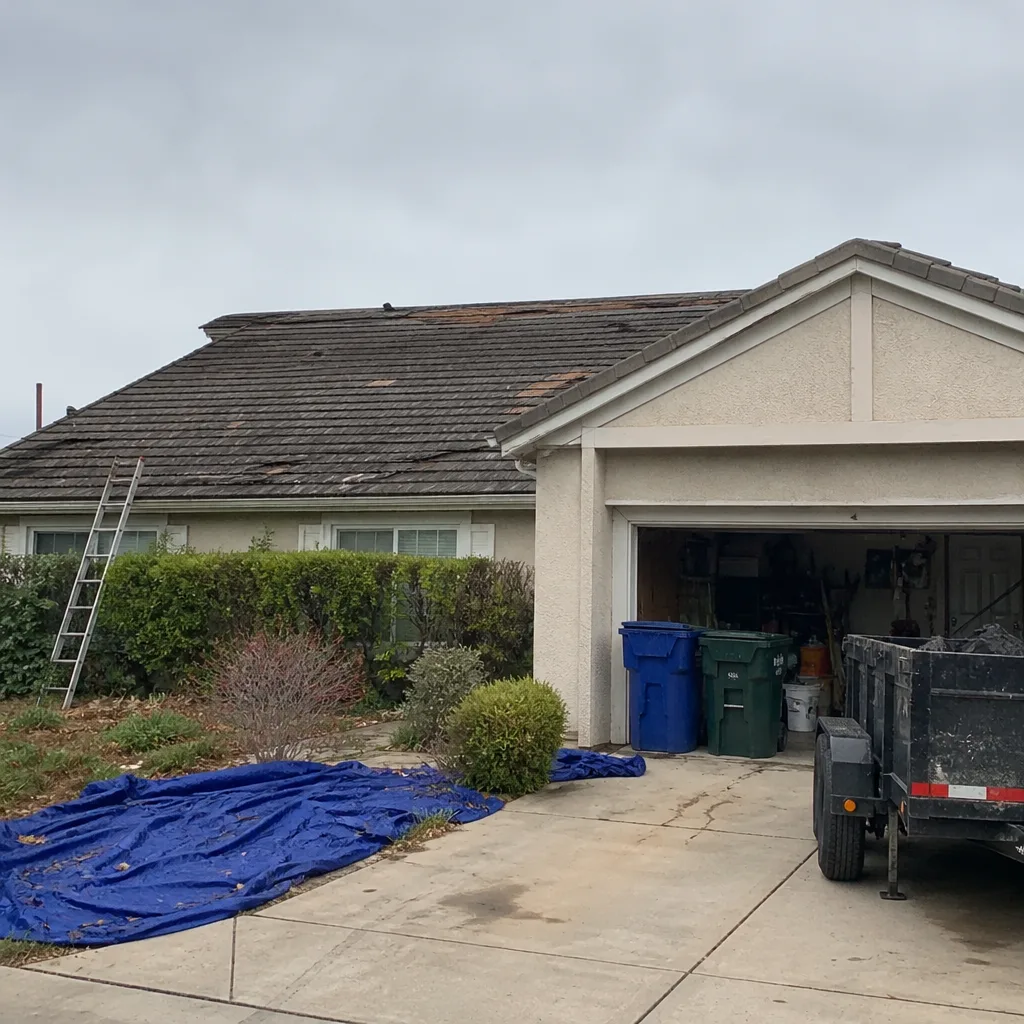 Before
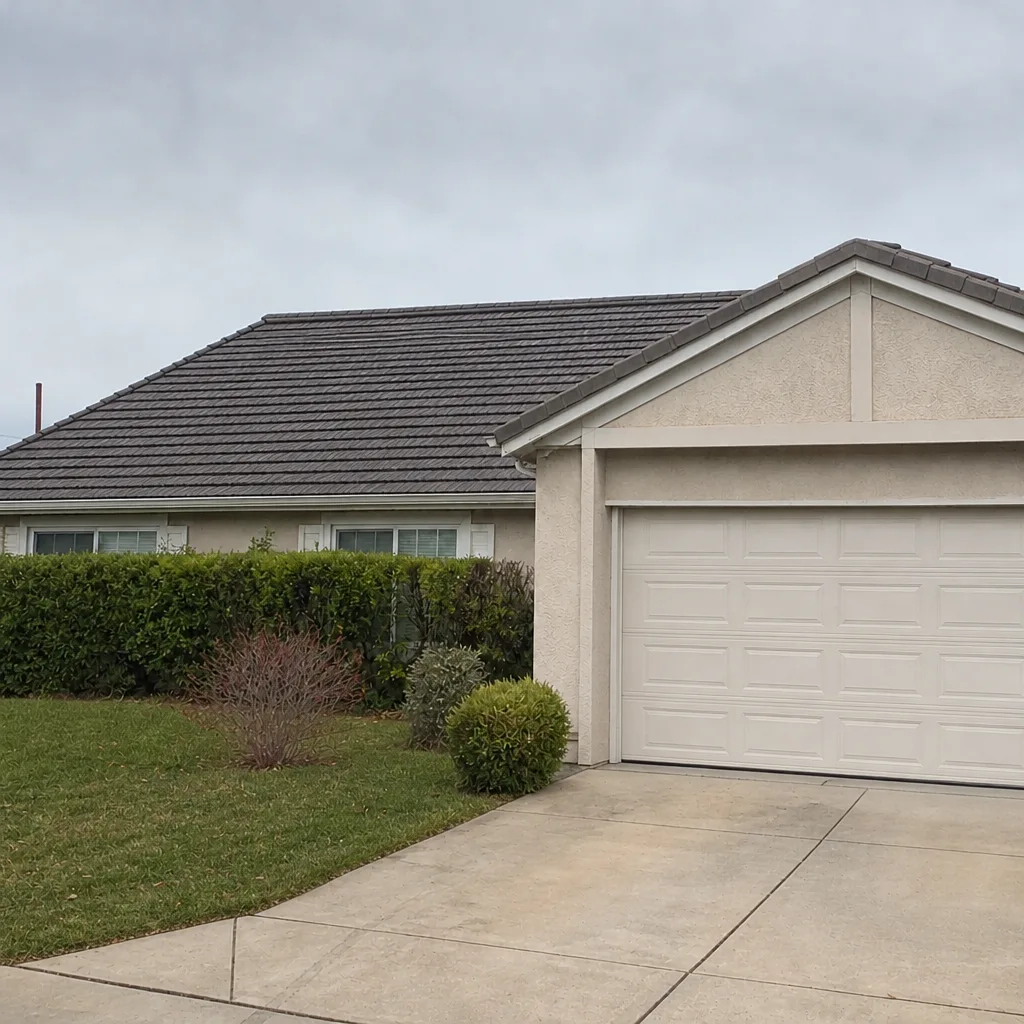 After
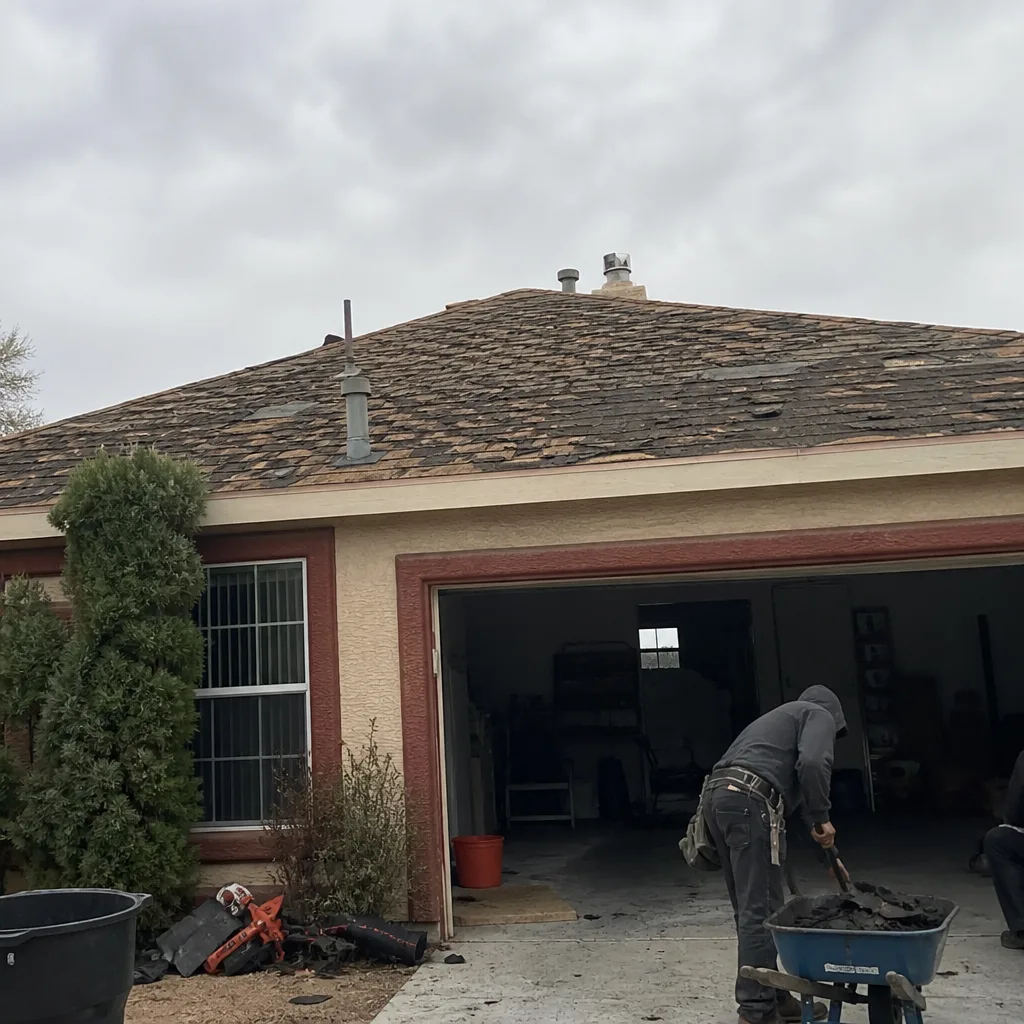 Before
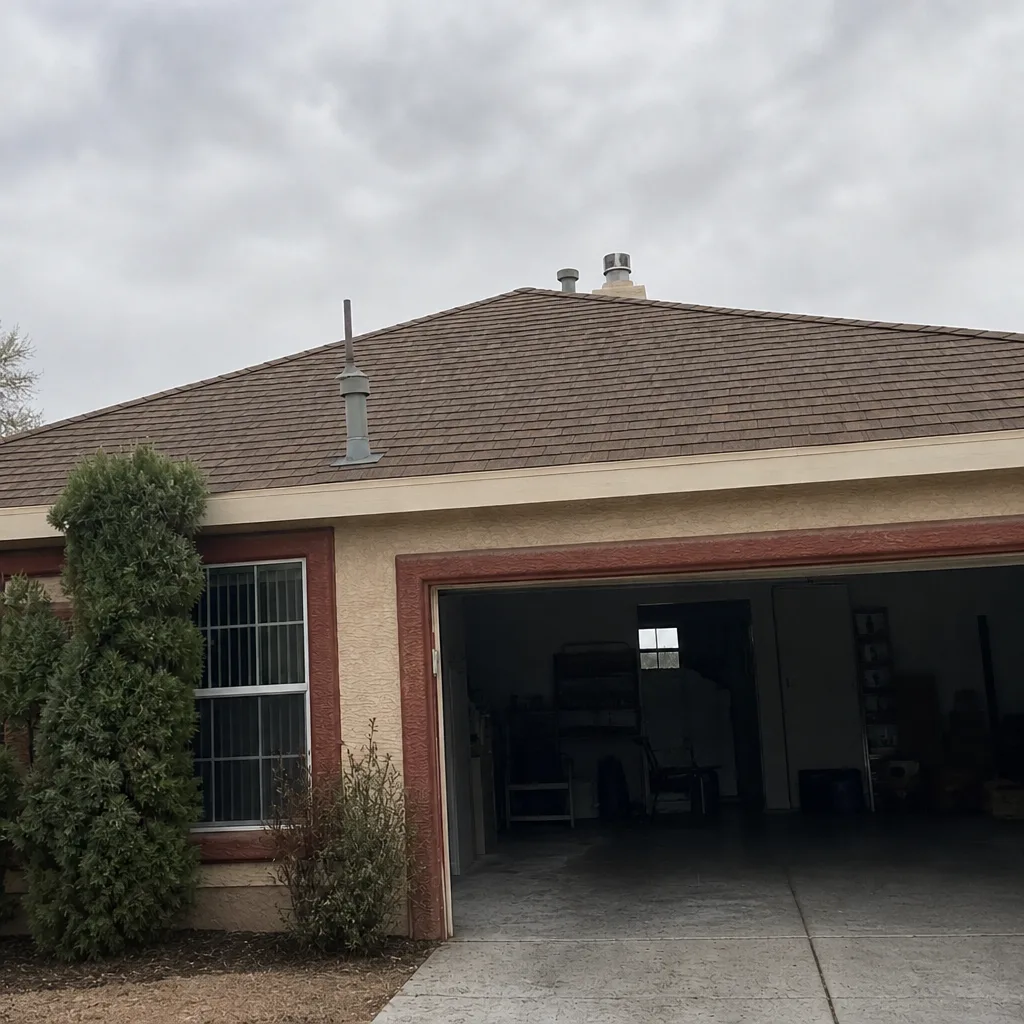 After
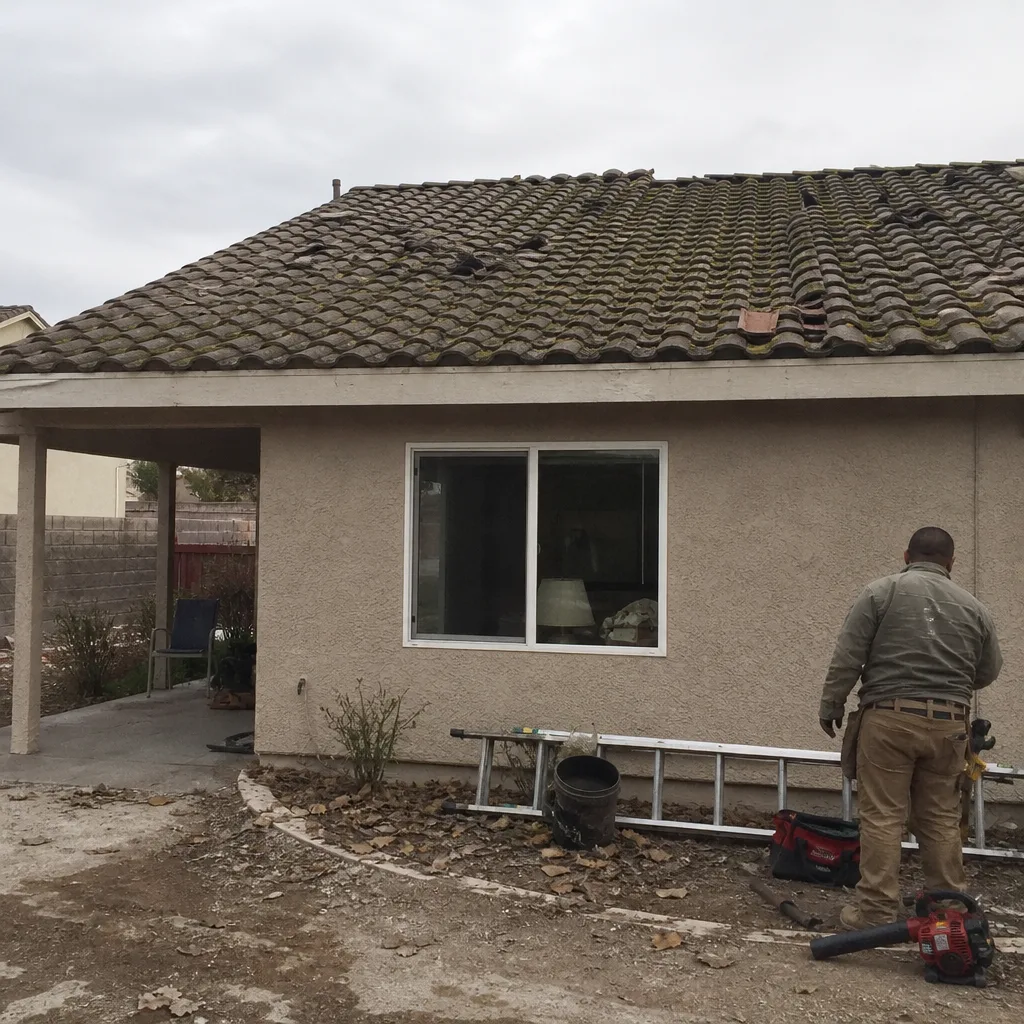 Before
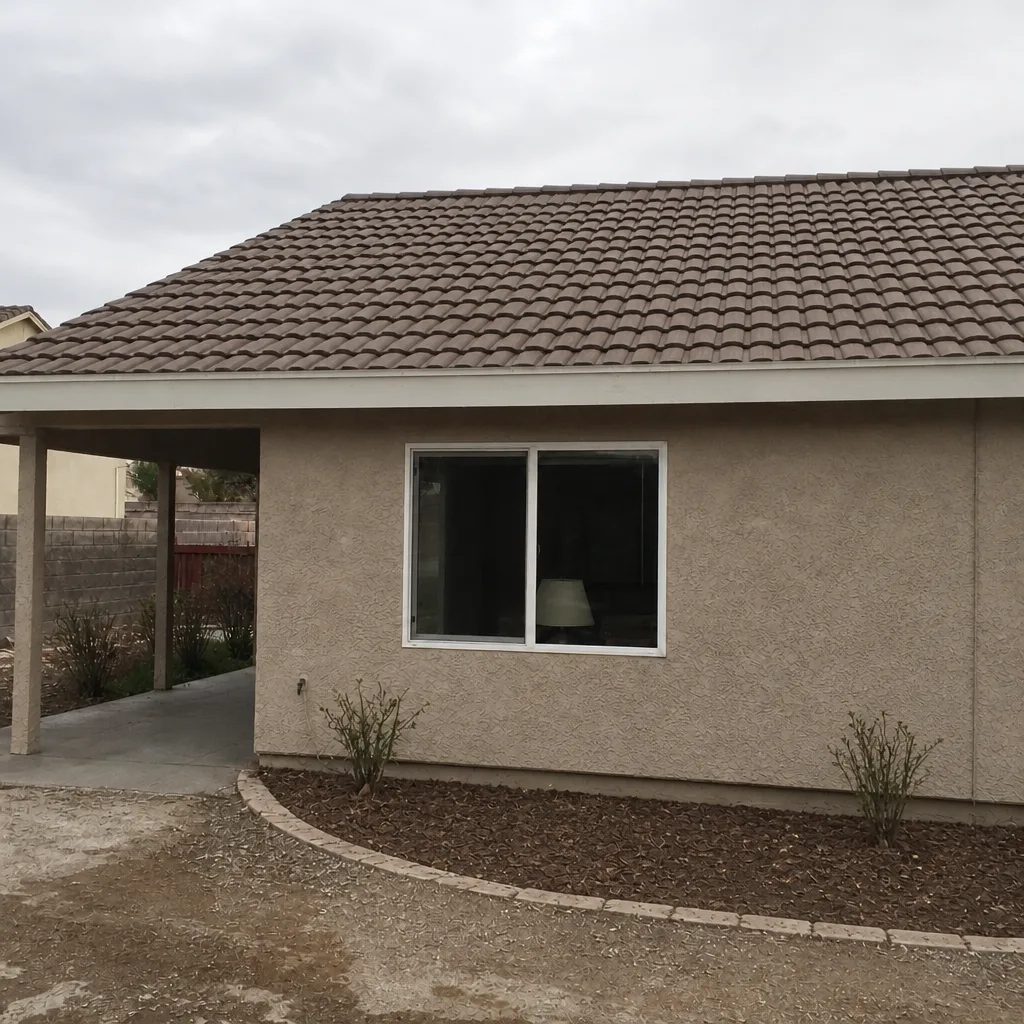 After
When to Call a Professional
Call a licensed professional when the scope involves a full replacement, a change in material, any decking or structure work, or a leak you can’t trace to a single point. Also call when a prior installation is undocumented and you’re preparing to sell or insure the property – that’s a documentation problem best handled before a sale rather than during one. Roof work at height is genuinely dangerous, and Summerlin’s heat adds a real hazard on a roof surface midday, which is one reason we don’t recommend walking a replacement candidate yourself. If the decking condition is unknown, the only honest way to know is a tear-off inspection under a permit. Roofing Summerlin offers free estimates in Summerlin – call (833) 932-1305. We answer 24/7.
Frequently Asked Questions
Yes. A full roof replacement or any re-roof that changes the roof covering type, adds or alters decking, or touches the structure requires a building permit in Clark County. A straight repair that replaces like-for-like material without altering the structure typically falls under the repair exemption. Call (833) 932-1305 for an exact determination on your scope – estimates are free.
The licensed contractor should pull the permit in their own name for a full replacement. Homeowners technically can pull an owner-builder permit, but doing so shifts inspection responsibility and possible disclosure obligations onto the homeowner. Contractors pull it, schedule the inspections, and provide the close-out record. Call (833) 932-1305 to confirm permit responsibility before you sign.
Most roofing permits go through a tear-off inspection with the decking exposed, an underlayment and flashing check where required, and a final inspection before the permit closes. The inspector verifies sheathing condition, nailing, flashing details, ventilation, and energy compliance against the submitted scope. Your contractor schedules each one. Call (833) 932-1305 to walk through the sequence for your roof.
The energy code generally sets minimum solar reflectance and thermal emittance values for steep-slope roofs on a full replacement, and it sets insulation requirements where the assembly includes insulation. The specific values depend on the code version in effect when the permit is submitted and on the product and color selected. GAF, CertainTeed, Owens Corning, and IKO all offer rated products, but the exact match has to be confirmed against current code and product data. Call (833) 932-1305 for an exact quote on a compliant assembly.
No. Summerlin’s HOA architectural review governs appearance and design consistency, while the Clark County building permit governs code compliance. The two run separately, and one does not satisfy the other. Get architectural approval moving early, confirm the code requirement, then permit. Call (833) 932-1305 to talk through the sequence for your property.
An unpermitted roof usually surfaces during a home sale, an insurance review, or when the next contractor pulls a permit and the county record shows an undocumented prior roof. The remedy often means retroactive permitting, which can involve opening the roof for inspection. Call (833) 932-1305 to discuss what documentation can be recovered and what a clean path forward looks like.
No – the written estimate is the fixed scope, including permit handling. Decking surprises found at tear-off can change what needs to be replaced, and those are documented as they come up so the estimate reflects the actual scope rather than hiding contingencies. Call (833) 932-1305 to schedule your free estimate and get a written line-item quote. We answer 24/7.
The Bottom Line
Roofing permits in Clark County are more specific than most homeowners expect, and handling them correctly protects two things a roof replacement should never jeopardize: the property record and the home sale. A full replacement needs a permit; a genuine like-for-like repair usually doesn’t. The permit is staged and inspected, and it closes only after a final inspection. Nevada’s energy code applies to replacements and is tied to product and color, so material choice and code compliance have to be checked together. Summerlin’s HOA architectural review runs alongside the building permit and never replaces it. Get permit responsibility in writing before you sign, and get the final inspection record before the last payment. That’s the whole process, done properly – and it stays simple when it’s handled by a licensed contractor who does it regularly.
About This Guide
We’re Roofing Summerlin, and we handle inspection, repair, and full replacement as three connected stages of one conversation. That means we inspect first and tell you plainly whether a roof repair is the right call or whether the scope requires replacement – and where a roof replacement is the answer, we explain the material options honestly. We install materials from seven manufacturer brands – GAF, CertainTeed, Owens Corning, IKO, Atlas, Tamko, and Boral – so recommendations are based on the roof, the budget, and the code requirement rather than a single product line. Our technicians have up to 8 years of experience, and every job we’re connected with gets a permit pulled when the scope requires it and a closed inspection record at the end. If you’re figuring out what your roof actually needs in Summerlin, and what the documentation should look like when it’s done, call (833) 932-1305. We answer 24/7. Fast dispatch from 7am to 7pm.
Written by the team at Roofing Summerlin.