
Last updated November 18, 2026
 Metal roofing
 Architectural shingles
 Tile roofing
 GAF
 Owens Corning
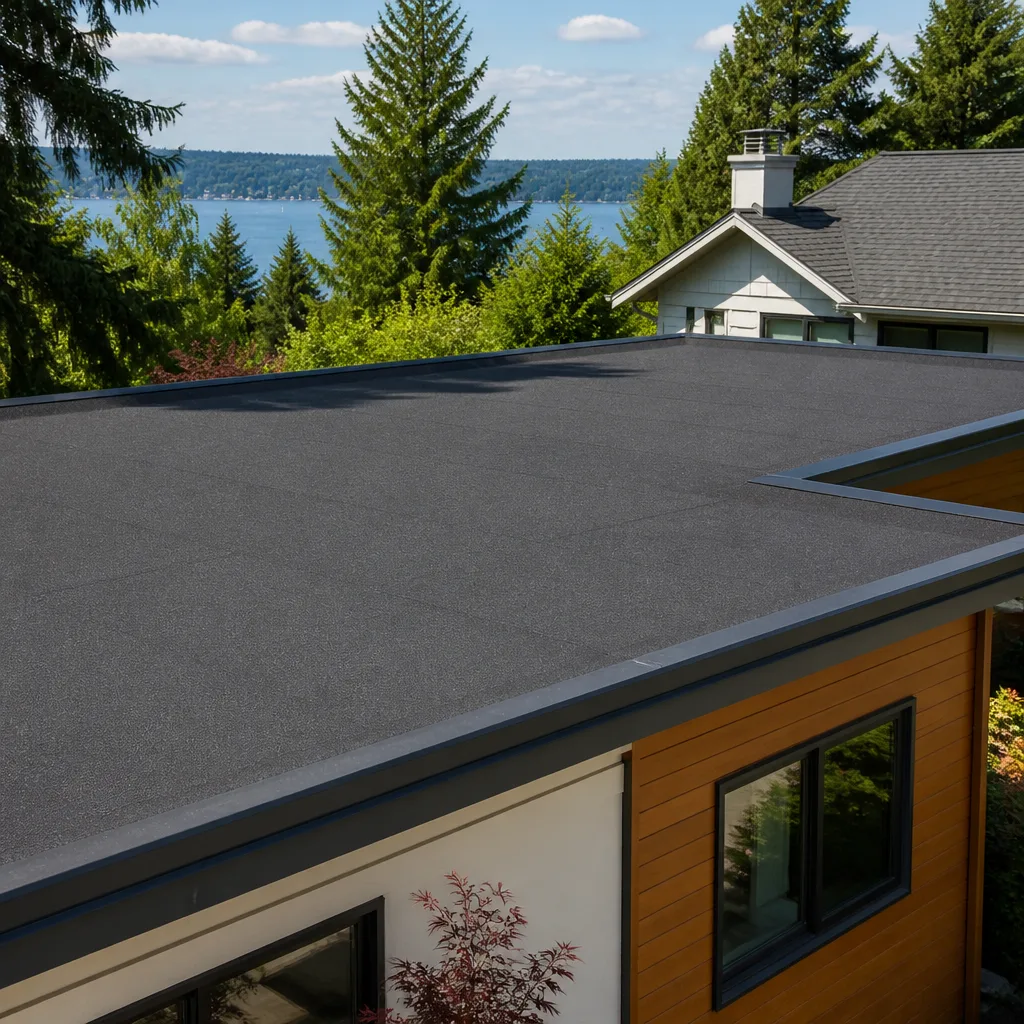 Flat & low-slope
Free roof inspection with deck photos before we talk money - GAF and Owens Corning certified installation
Roofing Warning Signs: A Summerlin Homeowner’s Reference Guide
A cracked tile on a Summerlin roof isn’t always an emergency. But a tile field that looks perfectly intact from the street, with crumbling mortar along the ridge line, often is. Most homeowners can’t tell the difference, and that gap in understanding is where small problems turn into interior damage. The guides most people find online were written for wet climates and asphalt shingles, which is why they miss the signals that actually matter on desert roofs. This reference covers what to look for on tile and flat roofs, how interior symptoms show up differently in dry air, and when a repair is genuinely enough.
Quick Answer
Roof problems in Summerlin usually show up first as broken or slipped tiles, cracked mortar at ridges and hips, membrane blistering on flat sections, or flashing that has pulled away from the wall. Interior warning signs in a dry climate tend to appear suddenly rather than gradually, because a small leak in low humidity may evaporate for months before it finally stains a ceiling. If you notice any of these, get an inspection before the next monsoon season rather than after it.
Styles & brands we work with
- Architectural shingles
- Metal roofing
- Tile roofing
- GAF
- Owens Corning
- Flat & low-slope
Table of Contents
- Why Summerlin Roofs Fail Differently Than What Most Guides Describe
- Tile Roof Warning Signs: Ridges, Hips, and Slipped Tiles
- Flat and Low-Slope Warning Signs on Summerlin Homes
- Interior Warning Signs in a Dry Climate
- Cosmetic Wear vs. Structural Warning Signs
- Repair or Replace? Honest Thresholds
- A Seasonal Walk-Around Checklist for Summerlin Homeowners
Why Summerlin Roofs Fail Differently Than What Most Guides Describe
Summerlin sits at the edge of the Mojave, in a valley where roofs face intense ultraviolet exposure, months of zero rainfall followed by sudden heavy storms, and a wide swing between daytime highs and overnight lows. Those conditions age a roof in ways that wet-climate advice doesn’t address. UV degrades sealants and underlayment faster than moisture does. Long dry spells let small breaches sit unnoticed. Then a single monsoon afternoon pushes water through a gap that has been open for months. The roof isn’t suddenly failing. It has been failing quietly.
The housing mix matters too. Large parts of Summerlin were built with concrete tile roofs, and many homes also carry flat or low-slope sections over garages, patios, and second-story transitions. Tile and flat roofing fail by completely different mechanisms, so a homeowner reading a generic article about “curling shingles” is often reading about a roof type they don’t even have.
We approach this from three services only: inspection, roof repair, and roof replacement. That’s deliberate. An inspection should be able to name the problem honestly whether the answer turns out to be a small repair or a replacement conversation. We inspect first. If repair is the right call, we’ll tell you. If it isn’t, we’ll show you why.
Our technicians have up to 8 years of experience working with the material systems that show up across Summerlin, from concrete tile to modified bitumen and single-ply membrane on the flat sections. That experience is what lets a real warning sign get separated from ordinary desert wear.
Tile Roof Warning Signs: Ridges, Hips, and Slipped Tiles
Concrete tile is one of the most durable roof covers made, and that durability is exactly what makes tile problems easy to miss. The tile itself can look fine for decades while the components beneath it and the mortar holding it in place quietly fail. On a Summerlin tile roof, the warning signs that matter most are rarely about the tile field.
Ridge and hip mortar cracking
Ridge tiles and hip tiles are bedded in mortar and typically held with a mechanical fastener as well. In desert heat, mortar shrinks, hairline cracks open, and water gets behind the ridge. From the ground this can look like a thin dark line. Up close it’s a crack you can fit a putty knife into. That crack is a genuine warning sign even though the tile above it is intact, because the ridge is where water is most likely to enter the underlayment.
Broken, cracked, or slipped tiles
An isolated cracked tile is common and often cosmetic. A cluster of broken tiles, or tiles that have slid down out of their course, is a different story. Slipped tiles usually mean the fastening or the mortar bedding has released, and once a tile moves out of position, the underlayment beneath it spends the rest of its life exposed to direct sun.
What the underlayment looks like when tile damage has gone unaddressed
Underlayment is the actual waterproofing layer on a tile roof. When it’s been exposed to UV through a gap, it dries, becomes brittle, and tears at the fasteners. In an attic or at a lifted tile edge you’ll see it going chalky and cracked. Once that happens, the tile above can be immaculate and the roof still leaks. That’s the single most misunderstood point about tile roofs, and it’s why a tile inspection has to include what’s under the tile, not just the tile surface.
Flat and Low-Slope Warning Signs on Summerlin Homes
Many Summerlin homes have flat or low-slope sections over garages, patio covers, and second-story transitions. These areas fail on a different schedule from the tile, and the warning signs are visible from the ground if you know where to look.
Blistering
On modified bitumen and similar membrane roofs, trapped moisture or air under the membrane expands in the heat of the day and pushes the surface up into a bubble. Blisters look like soft domes. Left alone, they crack and open. Blistering is a genuine failure signal, not just surface wear, because it means the membrane has separated from what it’s supposed to be bonded to.
Membrane shrinkage and pull-back at edges
Heat cycling makes membrane shrink over the years. When it shrinks, it pulls away from terminations, parapet edges, drains, and flashing. A visible gap at a wall termination or a lifted edge is a direct path for water. This is a common flat-roof warning sign on Summerlin homes because the daily temperature swing accelerates the cycle of expansion and contraction.
Standing water patterns after rain
After a storm, look at where water lingers on a flat section. Puddles that remain well after the storm has passed point to a drainage or slope problem. Water that has been sitting repeatedly leaves a visible pattern: dirt rings, dark tide marks, or a stain outline on the membrane. Ponds that persist for days are a warning sign even before the membrane fails.
Flashing pull-back
Flashing at wall junctions, penetrations, and drains is the most common leak point on any low-slope roof. Note the seam between the metal flashing and the roofing or the wall. If the sealant line has opened, or the flashing has lifted, that gap will leak at the next storm. Flashing problems are also often among the most repairable, which is why catching them early matters.
Interior Warning Signs in a Dry Climate
In humid climates a slow leak usually produces a gradual brown stain that spreads over weeks. In Summerlin, that pattern often doesn’t happen. Low humidity means a small leak can dry out before it reaches the ceiling, so the first sign you see is often a sudden stain after a heavy storm rather than a slow growing mark. Homeowners frequently assume something “just started,” when the entry point may have been open for a long time. That’s not a reason to panic, but it’s a reason to take the first stain seriously.
Interior signs worth acting on:
- A brown or yellowish stain on a ceiling or wall, especially one that appears after rain.
- Paint that bubbles, blisters, or peels in a spot that isn’t near a bathroom or kitchen.
- White chalky residue or efflorescence on drywall, which points to moisture getting behind the surface.
- Musty smell in an interior room with no obvious source.
- Daylight visible in the attic sheathing, or dark discoloration on rafters and decking.
- A ceiling that feels soft or sags slightly, which needs an immediate inspection.
- Water running down a wall during a storm, which is a leak that’s already well established.
What makes dry-climate interior signs tricky is that a stain may appear and then dry out completely, making it look minor. It isn’t minor. It’s the first time the problem was visible. A quick inspection now costs far less than chasing it later.
Cosmetic Wear vs. Structural Warning Signs
Not every mark on a roof is a problem, and treating every mark as a problem is just as bad as ignoring real ones. The useful skill here is knowing where the line sits, and the line depends on material type.
Cosmetic wear
- Fading or light chalky oxidation on concrete tile.
- An isolated broken tile in a low-traffic area of the field.
- Minor surface scuffs or sun bleaching on membrane.
- Small granules collecting at the base of a downspout on a shingle section.
- Mild discoloration from dust and pollen that washes off in the rain.
Structural or functional warning signs
- Ridge and hip mortar cracks that are wide enough to see clearly from the ground.
- Slipped or displaced tiles, or a cluster of broken tiles.
- Exposed or brittle underlayment visible at a lifted tile.
- Membrane blistering or lifting at edges.
- Flashing that has separated from the wall, penetration, or drain.
- Signs of sagging at the ridge line or along the eaves.
- Any interior stain after rain, anywhere.
The rule of thumb we use: if the surface finish has changed but the layering and fastening beneath it are intact, it’s cosmetic. If anything that holds water out has moved, opened, or separated, it’s functional. Aesthetic issues can wait. Functional issues should not. That’s the entire distinction, and it’s why a short inspection usually settles the question faster than the homeowner can from the ground, even with binoculars.
Material type matters here too. Seven of the industry’s leading brands are on the roster we install – GAF, CertainTeed, Owens Corning, IKO, Atlas, Tamko, and Boral – which means when a repair or replacement is the right answer, the material choice can be based on your roof instead of on a single-brand inventory. A roof replacement is a 20-to-30-year decision, so the material conversation matters as much as the recommendation itself.
Repair or Replace? Honest Thresholds
This is the question where a homeowner deserves a straight answer. There isn’t one universal scorecard, but there are thresholds that hold up across almost every tile and flat roof we look at.
Signs that point toward repair
- The problem is located in one area and the rest of the roof holds up around it.
- Ridge or hip mortar has cracked but the tiles are in place and the underlayment is still sound.
- One or two tiles are broken or slipped, and the field around them is intact.
- Flashing has pulled away at a wall or penetration but the membrane beneath is dry and not blistered.
- Blistering is isolated and the membrane is otherwise still bonded at edges and drains.
- The underlayment on a tile roof is intact beneath any exposed area.
Signs that point toward replacement
- Underlayment on a tile roof is brittle, chalky, or torn at fasteners across multiple areas.
- Membrane shrinkage and pull-back have occurred at multiple edges and penetrations.
- Blistering is widespread rather than isolated.
- Flashing problems are repeated across the roof, which usually means the entire system has aged out.
- Interior staining has happened in more than one location or during multiple storms.
- Sagging or deflection is visible at ridges or eaves, which points to the deck beneath the roof, not just the cover.
The honest version of this conversation treats thresholds like real thresholds. A single slipped tile on a Summerlin tile roof does not, on its own, call for a full replacement. Widespread underlayment failure does. What separates the two is inspection, and that’s why we offer inspection as a standalone service rather than only as a step toward a sale.
The other piece is coverage. When replacement is genuinely the answer, comparing manufacturer warranty tiers across competing brands matters. Access to multiple tiers means you can look at coverage levels side by side and pick the protection that fits your situation, instead of taking whatever warranty comes attached to a single product line.
A Seasonal Walk-Around Checklist for Summerlin Homeowners
You don’t need to climb on the roof to do something useful. A periodic walk-around from the ground catches a lot, and it takes about fifteen minutes. We suggest running this once before the summer storm season and once after.
- Look at the ridge and hips first. From the ground, scan the top edges of the roof for dark lines or crumbling mortar. Anything visible from that distance is worth a closer look.
- Check the tile field for slipped or clustered breakage. A single broken tile is common. A cluster or a tile that has visibly slid is not.
- Look at the flat sections after rain. Note where water lingers, and how long it takes to drain. Persisting puddles are a sign.
- Check flashing where the roof meets a wall or chimney. If there’s a visible gap or the metal has lifted, note it.
- Walk the perimeter and look at the fascia and soffit. Staining, blistering paint, or discoloration under the eaves suggests moisture getting in.
- Look inside the garage. Many Summerlin homes have garage ceilings under flat roof sections. Stains there are telling.
- Note anything new inside. A fresh ceiling stain after a storm is worth an inspection even if it looks small.
One caution: this is a ground-level checklist, not a roof-walking guide. Tile roofs are fragile under a foot, and a fall from a Summerlin roof is a serious injury. If you need someone up there, that’s an inspection, not a DIY project.
Common Mistakes to Avoid
- Judging a tile roof by the tile surface alone. The tiles can look flawless while the underlayment beneath is failing. Tile failures usually start under the tile, not on it.
- Dismissing a flat-roof blister as cosmetic. A blister means the membrane has separated. That’s a functional signal, even if the roof is technically not leaking yet.
- Assuming a sudden interior stain means a sudden leak. In Summerlin’s dry air, small leaks often dry out before they stain. The stain is often the first sign of a problem that has been there for a while.
- Sealing a flashing gap and calling it done. Sealant on top of an unresolved flashing pull-back often hides the problem for one storm and then fails again.
- Treating a full replacement as the default answer to any leak. Most flashing and isolated tile issues are repairable. The threshold for replacement is underlayment, membrane, or deck-level failure, not one broken tile.
- Walking the tile roof yourself. Tile can crack under the pressure of a footstep, and the slip risk on a pitched tile roof is real. Get an inspection from someone trained to be up there.
- Ignoring a single broken tile for a year. The tile itself is cheap to address. The exposed underlayment behind it going chalky and torn is not.
- Letting a repair quote be the only data point. If someone recommends replacement on the basis of one broken tile, ask them to explain what’s wrong with the underlayment. If they can’t, get a second opinion.
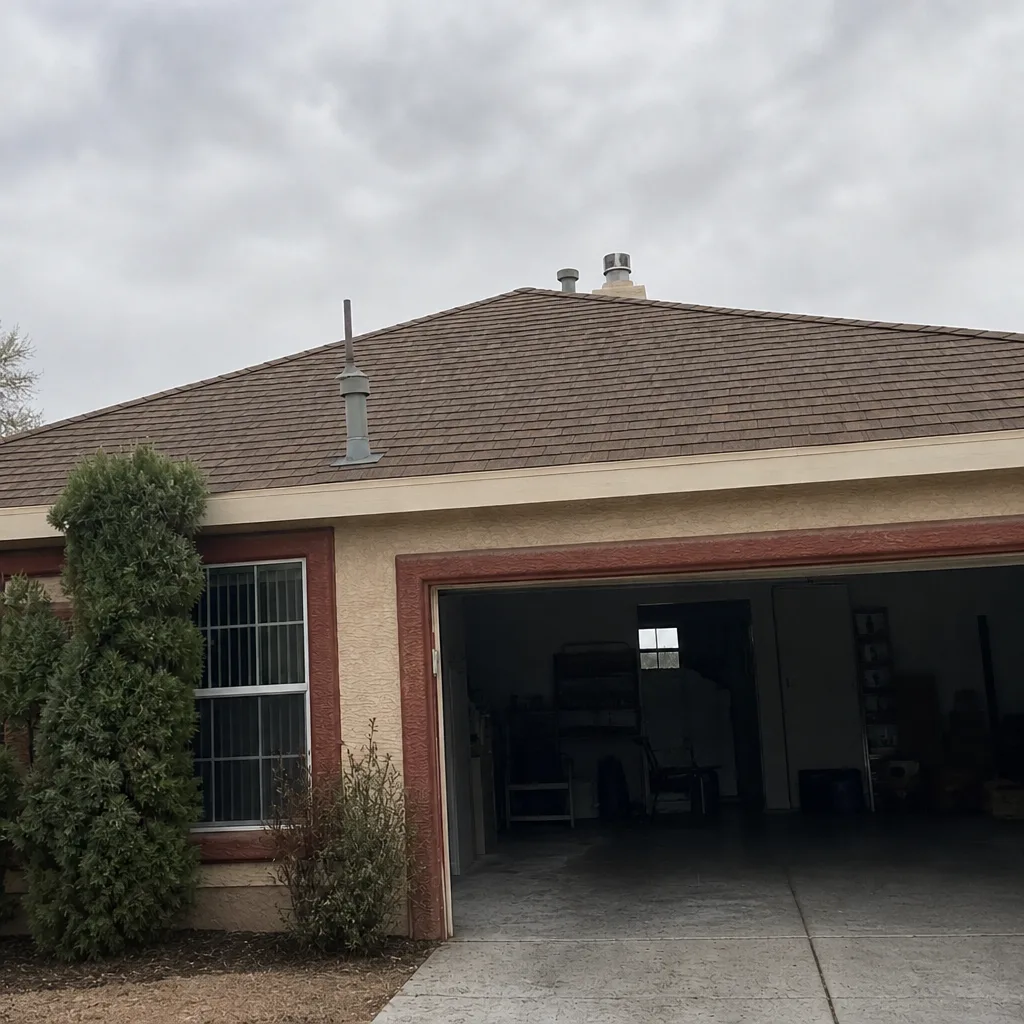
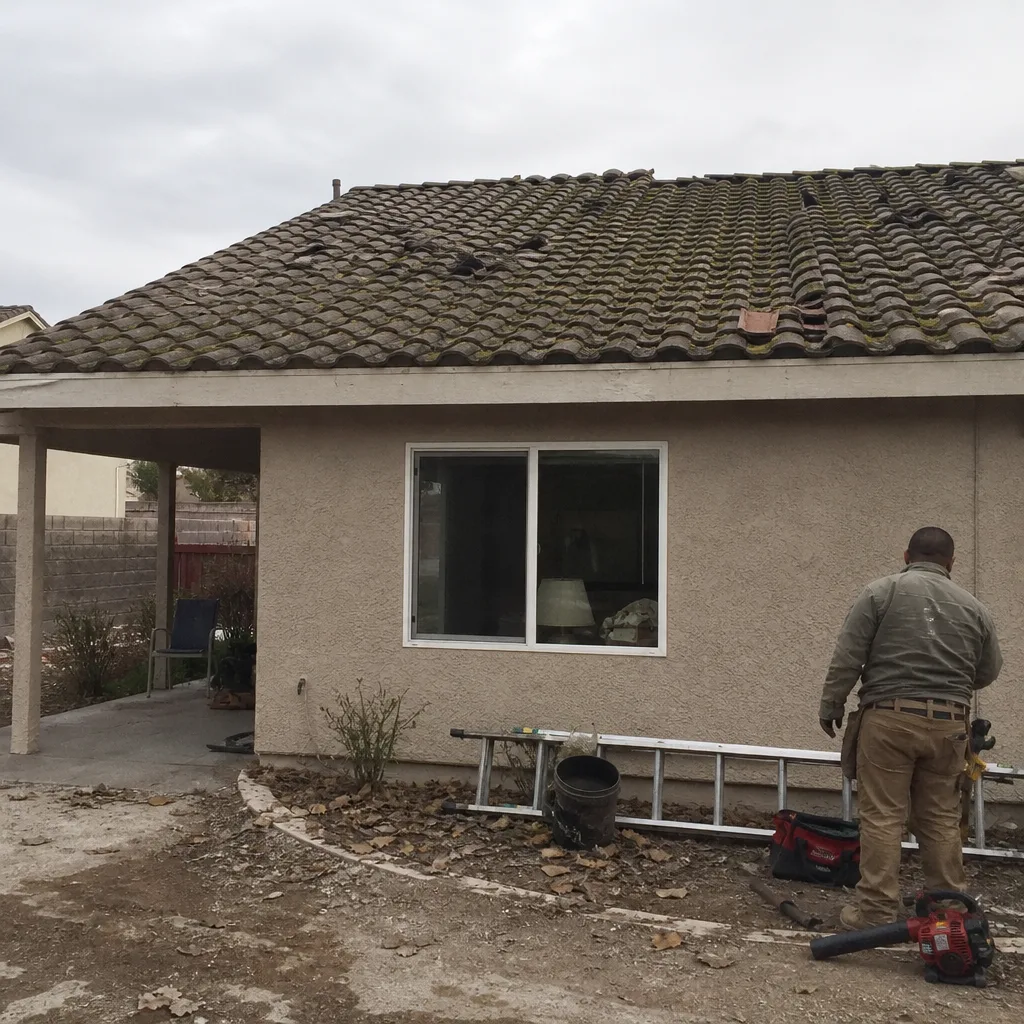
See the difference
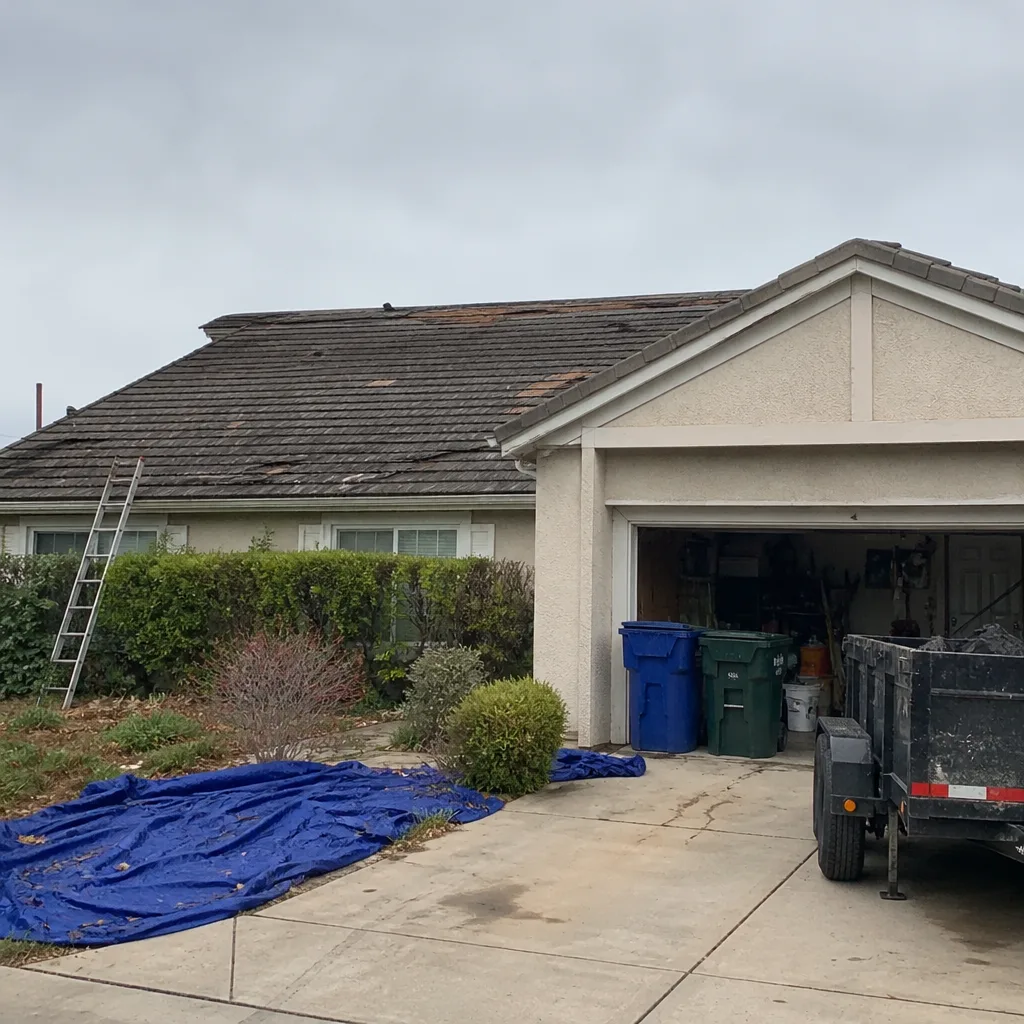 Before
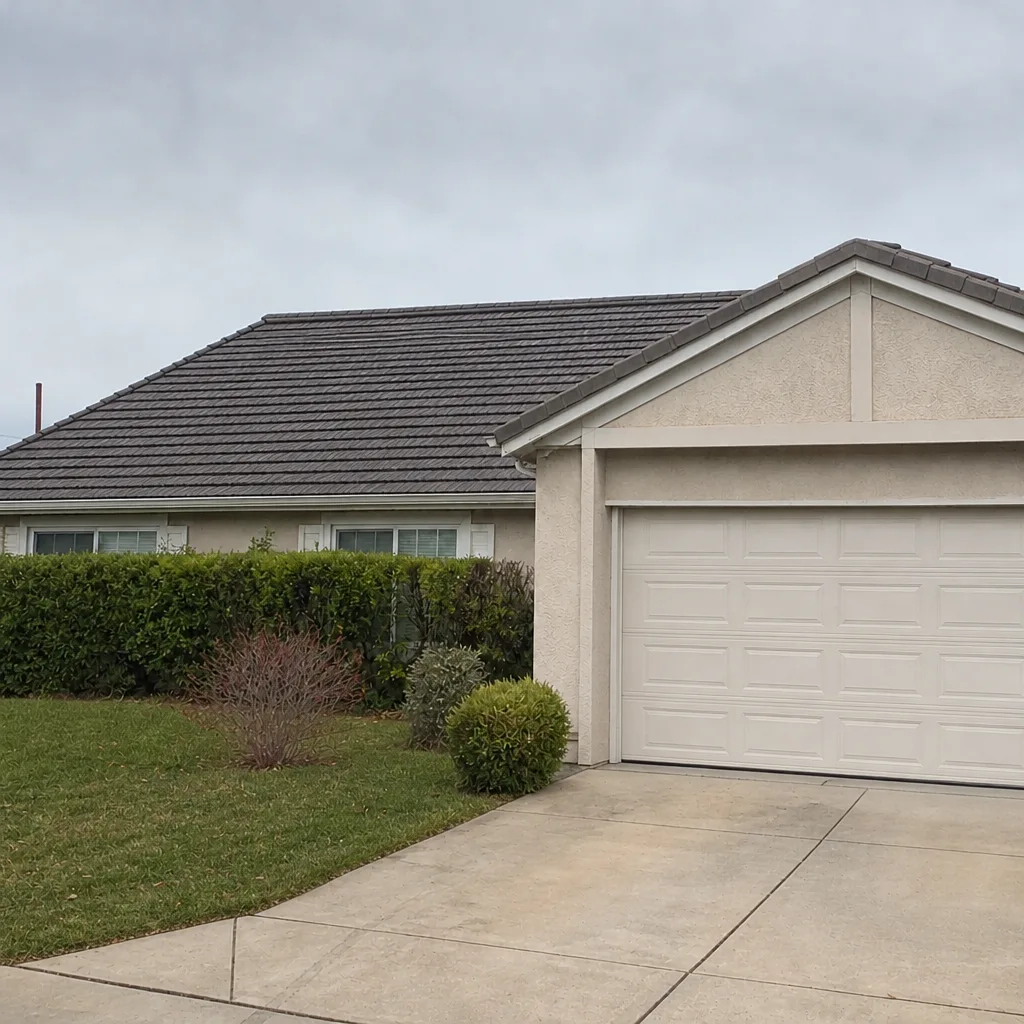 After
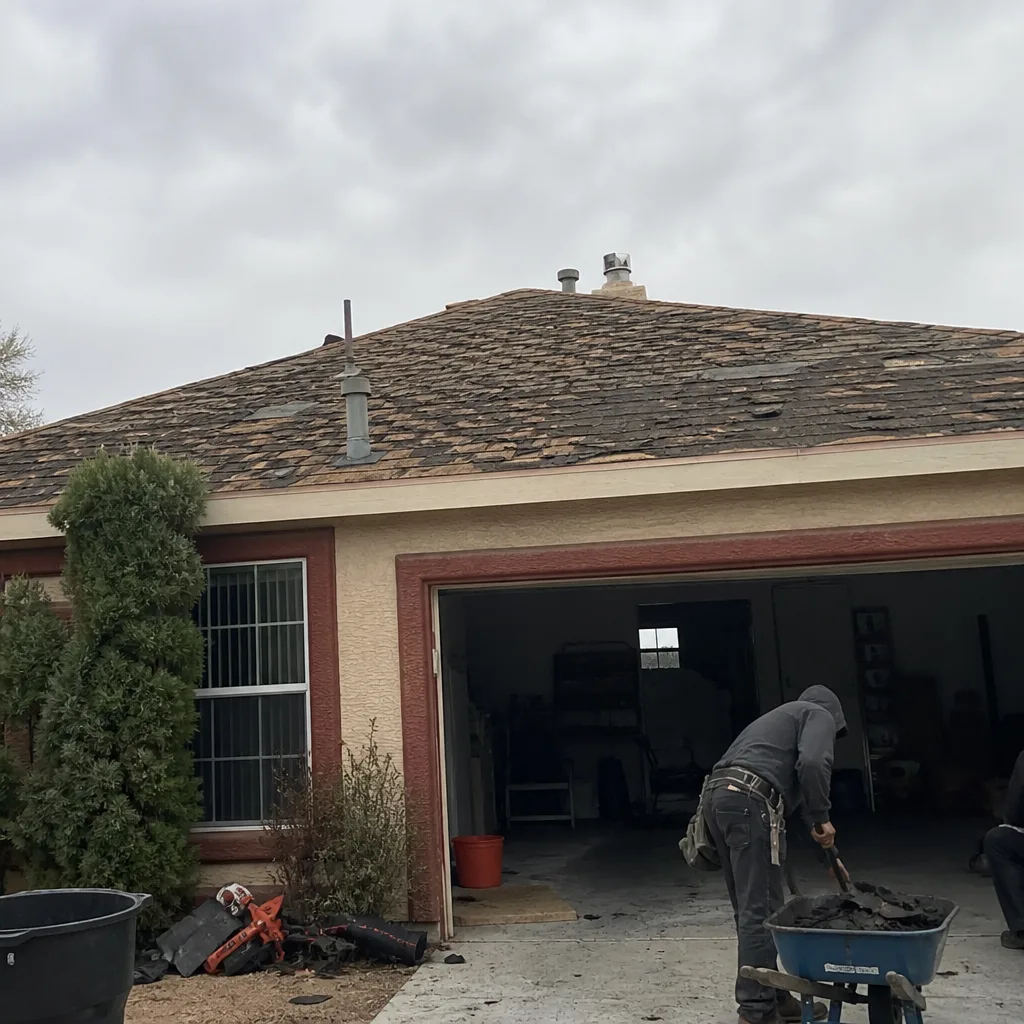 Before
 After
 Before
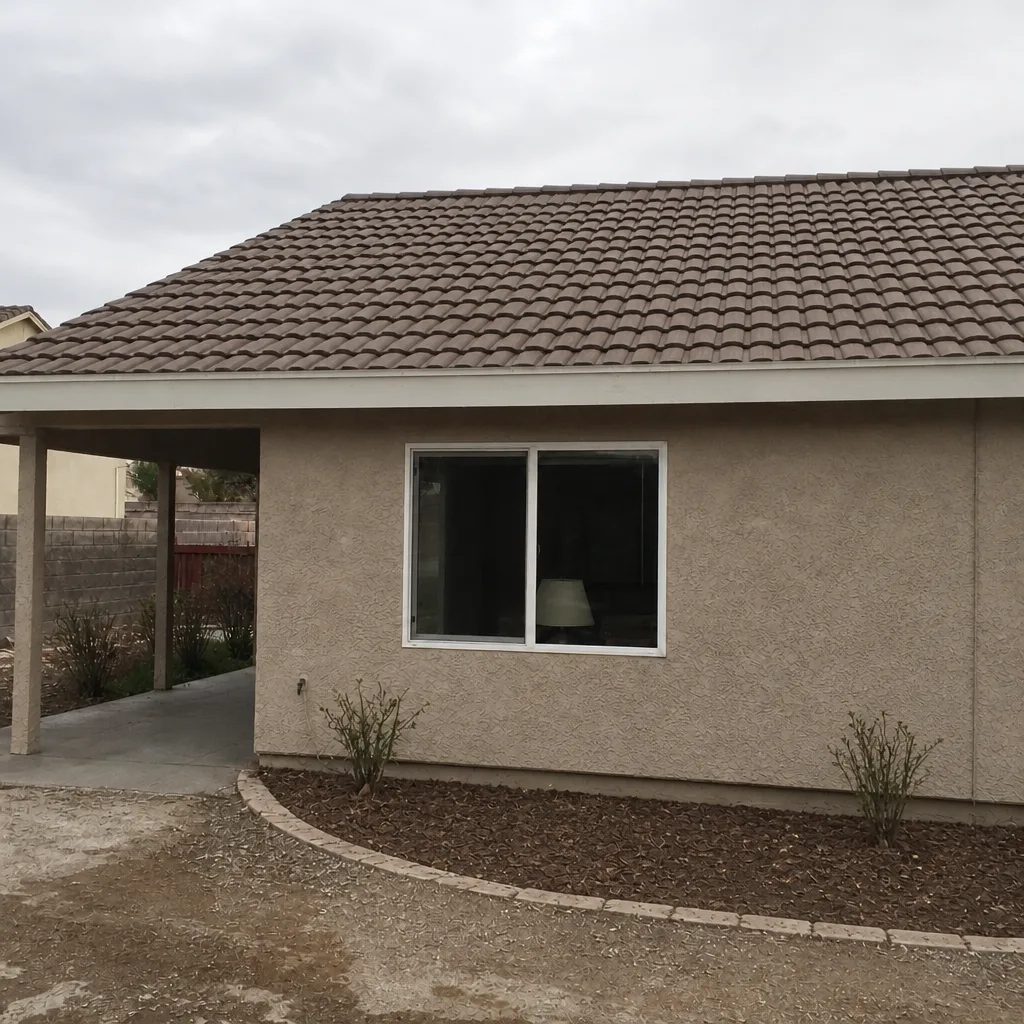 After
When to Call a Professional
Call for an inspection if you see any of the following: mortar cracking at ridges or hips that’s visible from the ground, a cluster of broken or slipped tiles, blistering or edge pull-back on a flat section, flashing that has separated at a wall or penetration, standing water that persists on flat sections, or any interior stain after rain. Call sooner if water is actively running during a storm, or if a ceiling looks soft or sagging. Tile roofs, membrane repairs, and flashing work all involve real risk of injury and real risk of making the problem worse if the diagnosis is off. Roofing Summerlin provides inspection, repair, and replacement as free-estimate services in Summerlin. Call (833) 932-1305 to schedule yours, or reach out through Roofing Summerlin for more detail on our services.
Frequently Asked Questions
The four most common warning signs on Summerlin roofs are cracked mortar at ridges and hips, broken or slipped tiles, membrane blistering on flat sections, and flashing that has pulled away from a wall or penetration. Sudden interior staining after rain is the other major indicator, and it’s usually a sign that a smaller problem has been active for a while. Call (833) 932-1305 for a free inspection if any of these match what you’re seeing.
A single cracked tile usually isn’t. A cluster of broken or slipped tiles, or cracking that lets water reach the underlayment, is a real problem that should be looked at quickly. The distinction depends on whether the tile field is holding water out. A short inspection is the fastest way to know which you have, and estimates are free. Call (833) 932-1305.
In Summerlin’s low humidity, a small leak often dries before it reaches the ceiling, so you don’t see a gradual stain forming. The stain appears when a storm delivers enough water to overwhelm the dry-out. The leak itself may have been active for months. Any interior stain after rain deserves a professional look, and we can schedule a free estimate. Call (833) 932-1305.
Repair is the right answer when the problem is localized and the rest of the roof system is sound. Replacement becomes the right answer when underlayment, membrane, or decking has failed in multiple areas. A ridge mortar crack with intact tiles is usually a repair. Chalky, brittle underlayment across the field is a replacement conversation. We inspect first and give you the honest version either way. Call (833) 932-1305 for a free estimate.
Blistering looks like a soft dome rising from the surface of a flat or low-slope membrane roof, usually from trapped air or moisture expanding in the heat. It’s a genuine warning sign because it means the membrane has separated from what it should be bonded to. Isolated blisters are often repairable. Widespread blistering usually points toward replacement. Call (833) 932-1305 to have it assessed.
Yes. We handle inspection, roof repair, and roof replacement as one continuous relationship, so there’s no handoff between the company that identifies the problem and the company that fixes it. Inspection is also available as a standalone service if you just want an honest condition read. Estimates are free. Call (833) 932-1305.
We install materials from GAF, CertainTeed, Owens Corning, IKO, Atlas, Tamko, and Boral, which means the material recommendation is driven by your roof and budget rather than by a single-brand inventory. For tile roofs and flat sections common in Summerlin, that breadth matters because the correct material depends on the roof profile. Call (833) 932-1305 for a free material consultation as part of an estimate.
A typical inspection covers the roof surface, ridge and hip conditions, flashing at all junctions, any flat or low-slope sections, and visible interior indicators. Duration depends on roof size and complexity. The estimate for any recommended work is written up line-item, so you can see exactly what’s included and ask questions before anything is approved. Call (833) 932-1305 to schedule.
The Bottom Line
Most Summerlin roof failures give warning before they cause interior damage. The signals are just different from what generic guides describe. On tile roofs, watch the ridge and hip mortar, and watch for slipped or clustered broken tiles that expose the underlayment. On flat sections, watch for blistering, edge pull-back, and standing water patterns. Inside, treat any stain after rain as a real signal, even if it dries quickly. Cosmetic wear can wait. Functional wear can’t. If you’re unsure which one you’re looking at, that’s exactly what an inspection is for, and it’s free.
When it’s time, Roofing Summerlin covers inspection through roof replacement with seven manufacturer brands and no single-product pressure. Call (833) 932-1305 for a free estimate. We answer 24/7. Fast dispatch from 7am to 7pm, Sunday through Friday.
Written by the team at Roofing Summerlin.